
Plus ça change
An accounting of Ziegler’s sourcing from Romania’s protected forests
Updated 7/29/2025
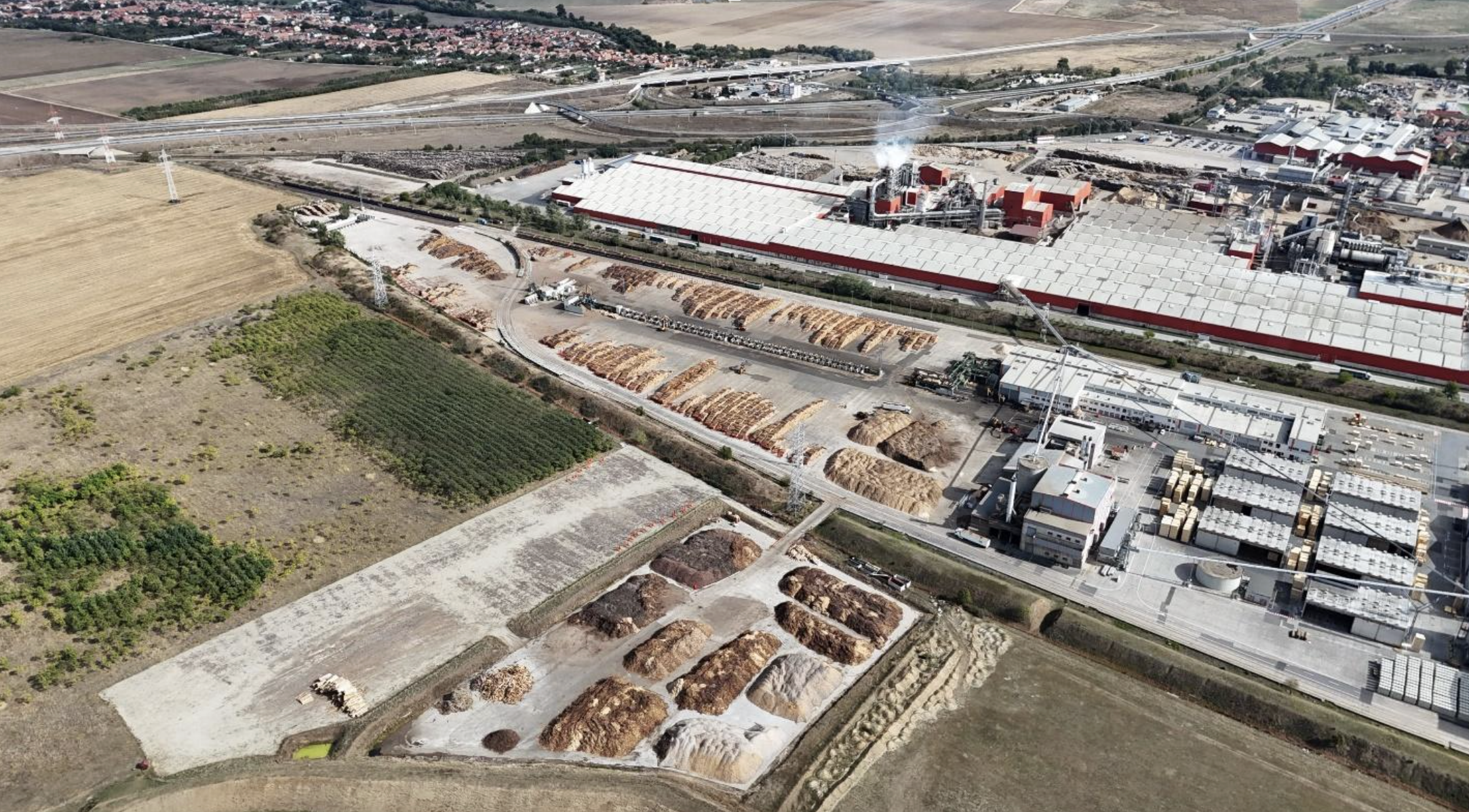
The HS Timber – Ziegler – Kronospan sawmill site in Sebeş, Romania. Image: EIA/Euronatur
One of Romania’s largest sawmills has seen its ownership passed between three multinational timber companies in the last decade, but one thing that hasn’t changed is its questionable sourcing practices.
HS Timber Group, then known as Holzindustrie Schweighofer, opened the facility in Sebeş in 2003 as the Austrian company’s first sawmill in Romania. Each year, the company cut well over a million cubic meters of logs at the site, which also includes a biomass pellet mill, electricity generation, drying plants and other facilities. The sawmill’s customers included companies across Europe and abroad, as well as producers of furniture and other wood products inside Romania.
Romania’s Carpathian Mountain range holds the greatest reserve of Europe’s last ancient forests and a wealth of biodiversity, including the continent’s largest populations of bears, wolves, and lynx. Unfortunately, Romania’s forest governance issues are also well-documented – a wide range of studies indicate that about twice as much timber is felled in Romania as is legally authorized.
In addition, each year the Romanian government officially permits the destructive felling of millions of cubic meters of wood from Natura2000 protected areas, despite the lack of requisite environmental impact assessments, and in violation of European law. Recognizing this, the European Commission has held Romania to be in infringement of its legal obligations since 2020.
In its first of several reports on illegal timber trafficking in Romania, EIA found that most of the illegal timber it investigated went to HS Timber. Despite HS Timber’s public claims on its website that it rejected timber from national parks, EIA documented cases in which the company purchased such timber. In undercover meetings with EIA investigators, HS Timber’s sourcing managers not only said they would accept illegal wood, but offered bonuses for extra deliveries.

Undercover video of sourcing managers from EIA’s investigation. Image: EIA
The government investigation that followed found that large volumes of illegal timber were being delivered to the Sebeş facility, as well as evidence of the creation of a large-scale illegal network to give the “illusion of legality to logs purchased without legal proof of origin.” Ten years later, it would appear that this investigation, led by Romania’s special authority for countering organized crime, has stalled indefinitely.
In response to these accusations, HS Timber established a GPS-based system to track the trucks that delivered wood to its sawmills. The company also promised to take action to prevent deliveries by fake shell companies and to stop buying wood sourced from national parks.
At the time of EIA’s first report in 2015, HS Timber was the single largest wood buyer in Romania, and maintained a near-exclusive focus on spruce wood. The Romanian parliament subsequently passed a law limiting the amount of a particular tree species that a single company could harvest to 30 percent.
In April 2023, citing the 30 percent restriction and the inability to continue to import logs from Ukraine, Russia and Belarus, HS Timber sold the Sebeş plant to Ziegler Group, a German timber company. Given Romania’s continued failure to tackle its illegal logging problems, the German NGO Robin Wood held a protest outside Ziegler’s headquarters in March of 2024. Ziegler employees responded violently, knocking a journalist’s camera out of his hands and cutting a climber’s rope from a high office window.
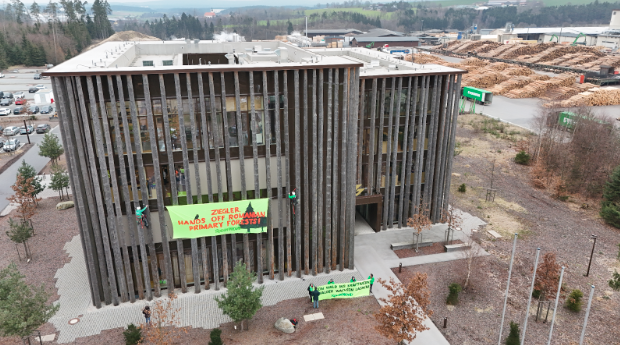
Robin Wood protest at the Ziegler headquarters in Germany. Image: Robin Wood
Ziegler management told a Romanian reporter that the company intended to continue HS Timber’s policy to turn away logs from national parks. Despite this commitment, EIA found that shipments from cut sites in Rodna National Park and Calimani National Park continued to arrive at the location after Ziegler took over the site. EIA’s review of timber transport data from Romania’s public timber traceability system, SUMAL, also showed that tens of thousands of cubic meters of timber continued to be transported to the facility from Natura2000 protected areas.
Ziegler ran the Sebeş facility for about two years before recently declaring bankruptcy. In March of 2025, Ziegler agreed to sell the plant to Kronospan, another Austrian company with a major presence in Romania. According to the company, as of July, 2025, the transaction is on hold, pending regulatory approvals. Neither Ziegler nor its insolvency administrator responded to a request for comment on EIA’s SUMAL analysis.
What is SUMAL?
SUMAL is Romania’s national transparent timber traceability system. In continuous operation since 2014, it is used to record thousands of transports of logs, planks, wood chips and scraps every day across the country.
Before starting a journey, an individual or company carrying wood must use the SUMAL Android mobile application to register detailed information about the shipment, including the driver’s name, the truck’s license plate number, the sender and recipient of the wood, and the type, amount, quality and species of the timber they are transporting. The user then takes three photos of the front, back, and side of the vehicle, and then registers the start of the journey. All of these operations can be carried out offline. When the driver reaches cell phone connectivity, the data is automatically uploaded to SUMAL’s central database. As the vehicle drives, the SUMAL app records the GPS track of the journey, and once the journey is complete, this information is uploaded to the SUMAL database as well.
In 2016, the Romanian government released the Forest Inspector, a transparent window into SUMAL data. The Forest Inspector is an open, online geoportal, in which users can access nearly all of the data from all registered SUMAL transports from the past 72 hours, with the exception of the driver’s name. The Forest Inspector also has a mobile app, with which users can type in the license plate number of a truck carrying timber. The user receives an immediate answer whether the transport is legal or illegal – if illegal, the user is prompted to call the police to report the violation. Within three months of the release of the Forest Inspector mobile app in June 2016, the number of transports being officially registered in SUMAL jumped by 60%, a clear sign of the power of public transparency in rooting out fraud.
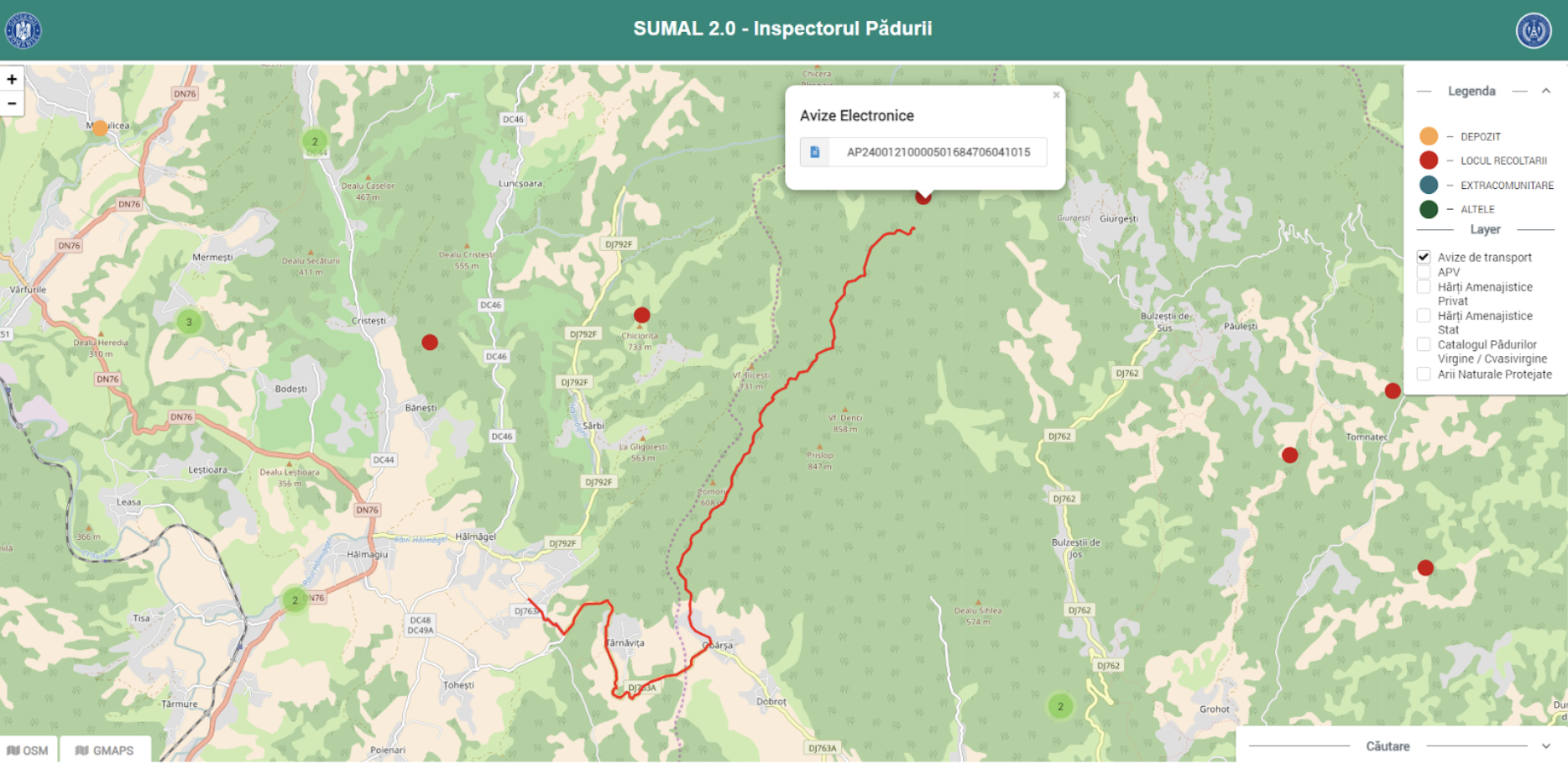
Romania’s Forest Inspector makes public real-time data about all timber transports in the country. Image: Inspectorul Pădurii
Europe’s extensive network of Natura2000 protected sites are at the center of the EU’s biodiversity strategy. The law requires that member states prevent deterioration of these habitats or disruption of the species that live there and that a formal assessment be conducted for any project within the protected area.
Unfortunately, these safeguards are often ignored by local administrators, who continue to issue harvest permits to logging companies despite clear evidence of environmental damage. Local investigators visited several sites linked to shipments to the Sebeş facility during Ziegler’s ownership and found evidence of severe forest degradation and violations of the Romanian forestry code.
While the facility’s various owners may have developed slightly different supply networks, the data shows a similar reliance on protected areas for the plant’s raw timber.
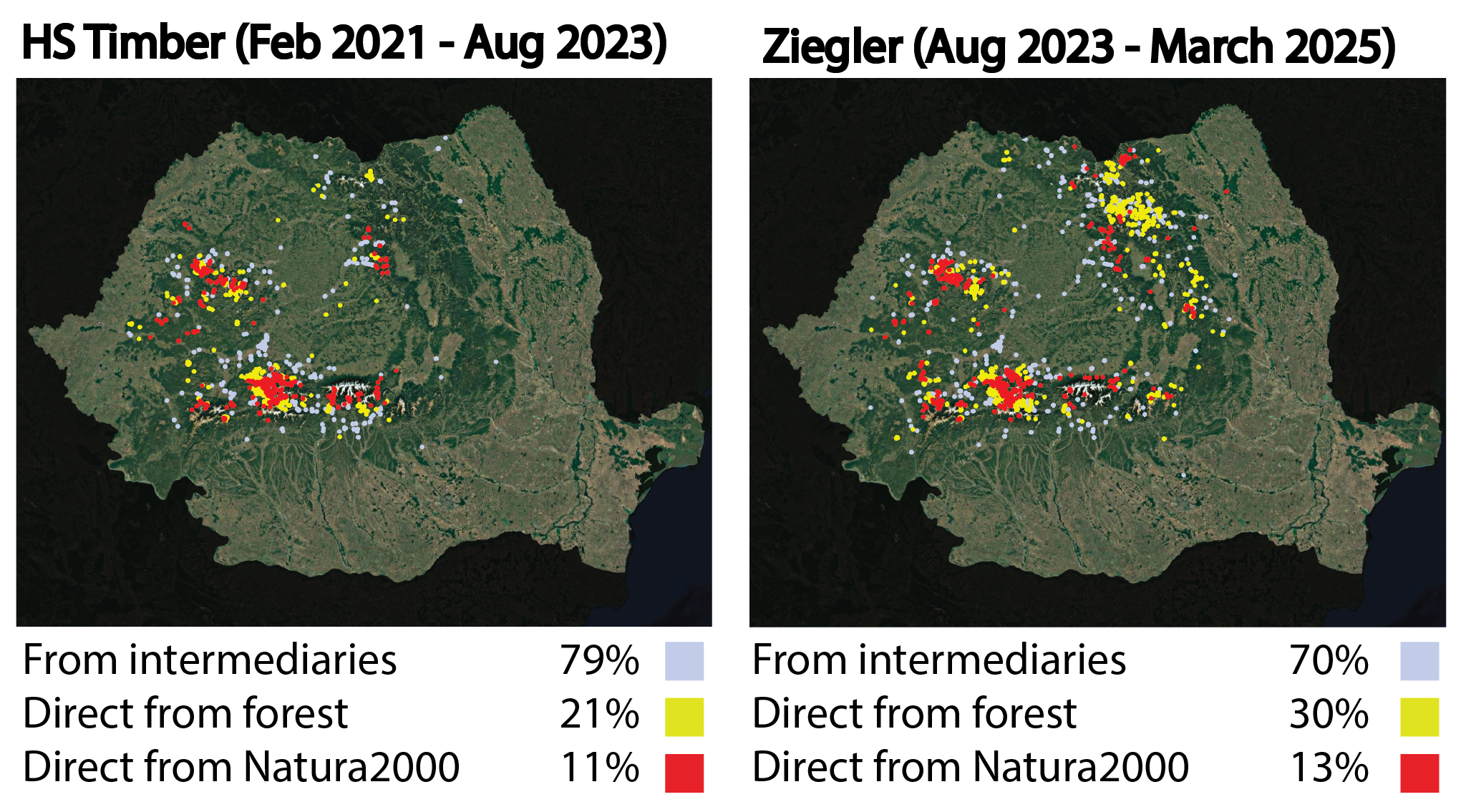
EIA’s analysis of SUMAL data also found that Ziegler received a significant portion of its timber from the Făgăraș and Frumoasă Natura2000 protected forests. These forests had been the focus of a complaint by NGOs Agent Green, Client Earth and Euronatur that led to the European Commission’s infringement case against Romania’s government in 2020.
Local investigators visited one of those logging sites in the Sinca Valley in the Făgăraș mountains and found degradation of the old-growth forests in the area. The destruction is especially striking given that it is immediately adjacent to a forest that has been declared a UNESCO World Heritage site.
Despite the EU infringement case and the area’s recognized high biodiversity value, local administrators have continued to allow commercial logging in the region. Investigators found that trees had already been marked for cutting within the environmentally sensitive buffer zone around the World Heritage site.
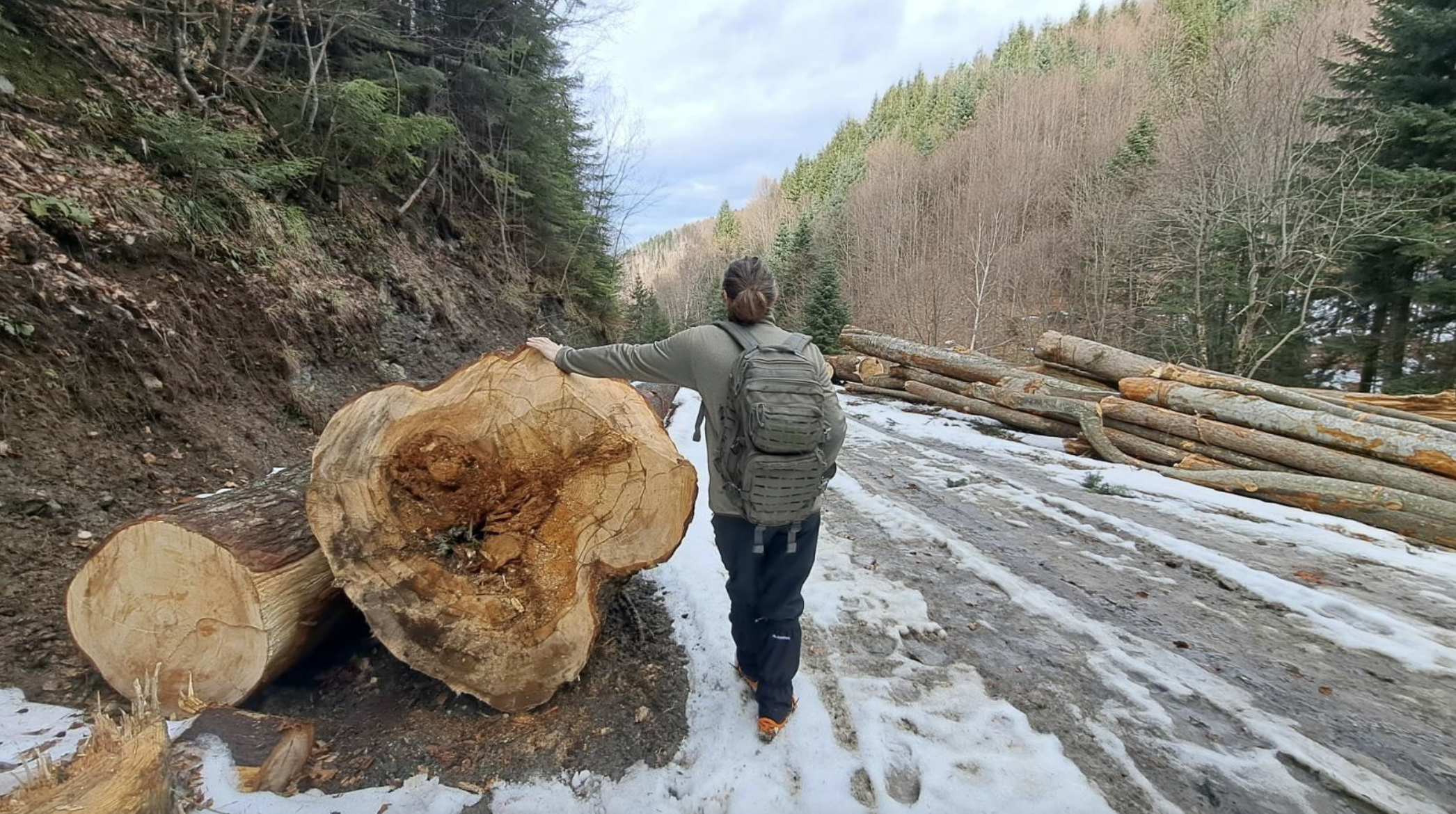
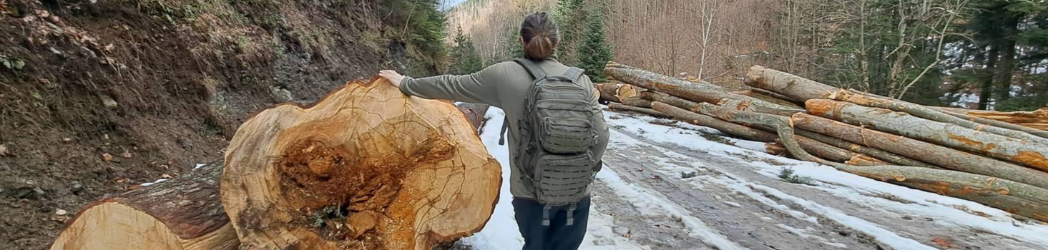
Large trees typical of old-growth forests that were cut and left on the road. Image: EIA/Euronatur
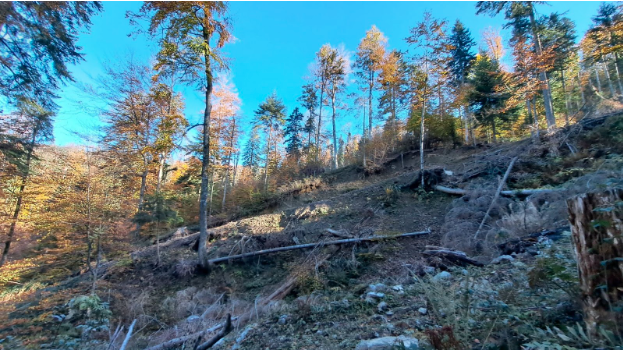
Progressive logging and deep erosion inside the UNESCO buffer zone, within a few hundred metres of the UNESCO core zone. Image: EIA/Euronatur
A second site on a steep mountainside near the Barsa valley within Făgăraș featured three massive scars across the landscape with no visible signs of re-generation.
Of two timber harvest sites at this location that shipped wood to Ziegler according to SUMAL data, one was authorized as a “T. rase,” a clearcut. The other was “T. produse accidentale” – accidental logging – a type of harvest that is supposed to target sick or damaged trees, but is sometimes used as a pretense for cutting healthy forests.
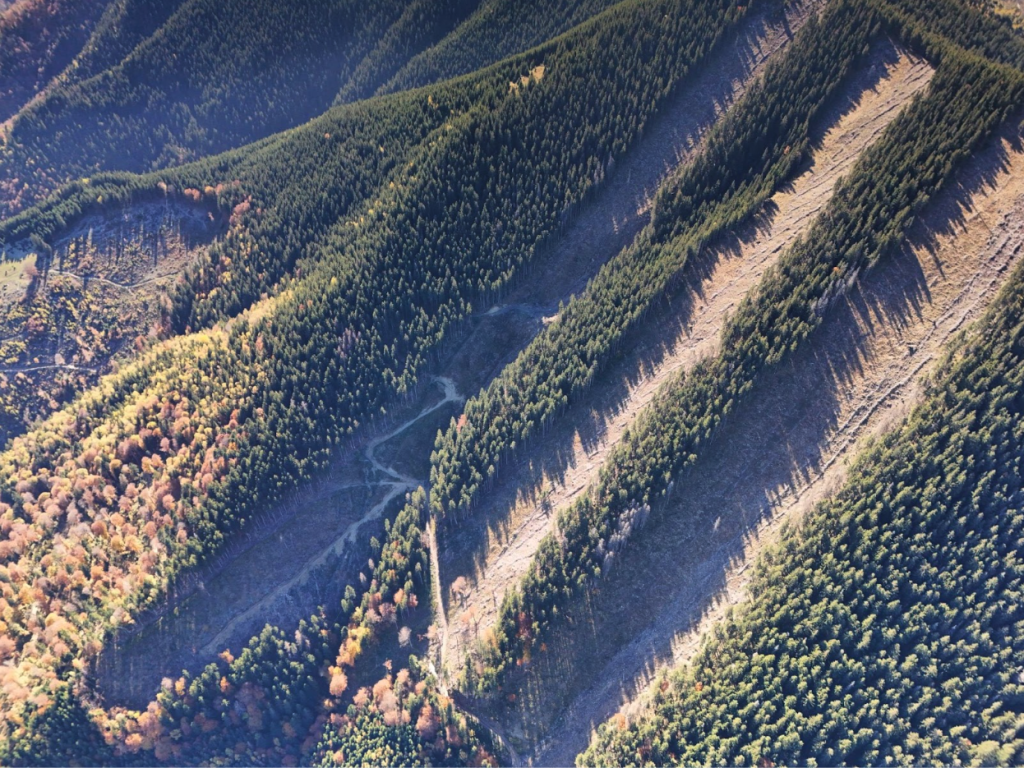
An area in the Făgăraș mountains with shipments that went directly to the Ziegler facility. Image: EIA/Euronatur
The two sites highlighted above involved log trucks that drove directly from the forest to the facility in Sebeş. These shipments are easiest to track, but about two thirds of the timber arriving at the mill comes from intermediaries that stockpile wood from many different forest sites. EIA found that the intermediary sites that had delivered to the Ziegler location were also drawing heavily from Natura2000 sites, including Făgăraș and Frumoasă.
Local investigators visited a forest that supplied one of these indirect sites in another of the scenic valleys within the Făgăraș protected area and found that the roads put in place to allow the exploitation of the area’s old fir, spruce and beech trees had led to heavy erosion, sediment buildup and landslides. One described the winding road leading to the site as “one of the worst roads cut through intact Romanian forests in recent years.”
Almost a million and a half euros (1,497 mil) in agricultural funds from the European Union went into the construction of the access road, according to the Information Panel found on-site.
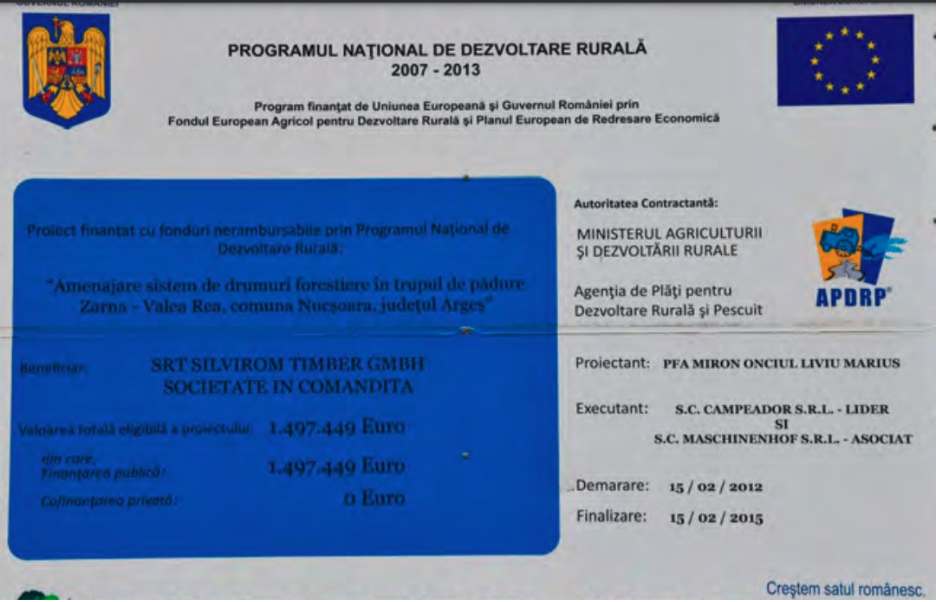
EU Information panel found at the base of the logging road, confirming that EU funding was used here. Image: EIA/Euronatur
According to Romanian forest records, the forests in this area are on average between 130 and 180 years old, and individual trees are likely much older.
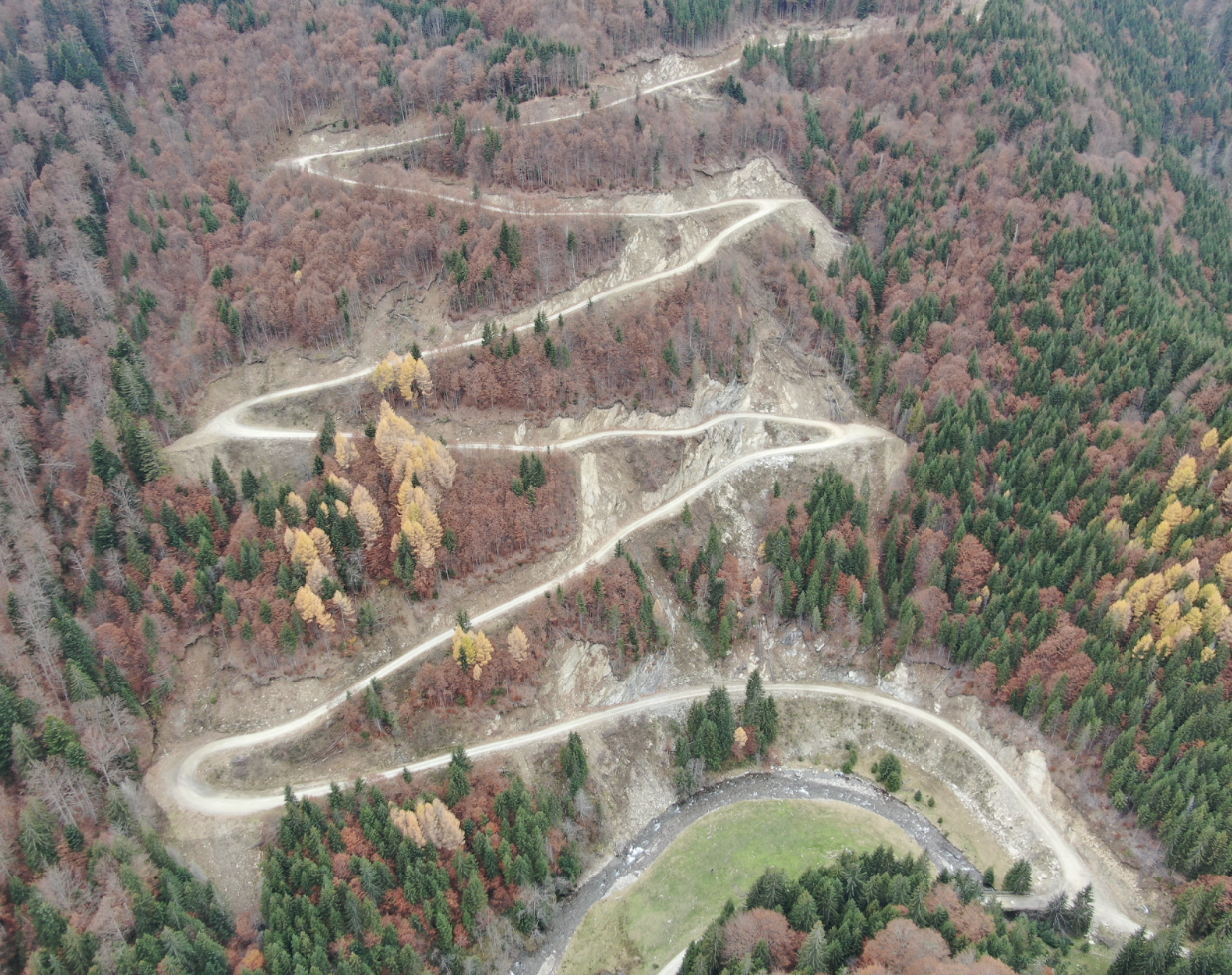
A collapsing logging road in Făgăraș mountains. Image: EIA/Euronatur
The prevalence of log depots and intermediaries in Romania makes it hard for even big buyers like Ziegler to know the origin of the wood they purchase or the destruction they might be causing in Romania’s ancient forests. It also makes it difficult to know the true volume that Romania’s largest timber consumers are extracting from areas that are supposedly under EU legal protection.
The Sebeş facility is just one of many large timber processing operations exploiting protected forests across Romania. It is symptomatic of an industry that has failed to safeguard one of the nation’s most significant natural resources.
Kronospan’s purchase of the Sebeş plant could mark a new chapter for the facility and an opportunity for its owners to commit to more transparent and sustainable supply chain decisions in Romania. EIA asked the company if it is committed to rejecting logs from the country’s national parks and whether it had any policies in place regarding the country’s Natura2000 areas, but received no response.
This blog post was updated on 7/29/2025 to reflect the current status of Kronospan’s ongoing acquisition process.