Mercury Emergency in the Amazon
Release of EIA Briefing to Minamata COP-6
Washington, D.C. – According to new analysis from the Environmental Investigation Agency US (EIA) the current agenda of the sixth meeting of the Conference of the Parties to the Minamata Convention on Mercury (COP-6) and proposed decisions do not sufficiently reflect or address the urgent needs of Indigenous Peoples and local communities in the Amazon. EIA’s analysis, entitled Mercury: An Amazon Emergency, shows that the escalating illegal flow of mercury driven by illegal gold mining and its underlying causes is now a crisis, driving emissions comparable in scale to global mercury emissions from all industrial sectors combined. The report underscores the urgency for Parties to act beyond compliance, toward coordinating enforcement action; and revising the 15-year grace period under which mercury mines are allowed to operate, as well as the allowed use of mercury under the Convention by the so-called artisanal and small-scale gold mining (ASGM) sector.
In the Amazon, the contamination of Indigenous Peoples and local communities by mercury is at its worst. Over the last two decades, mercury pollution along rivers has intensified, affecting major tributaries and resulting in high levels of mercury in water, sediment, aquatic life, and human populations. Scientific monitoring shows that mercury concentrations far exceed safe thresholds in many areas, with predatory fish and river dolphins heavily contaminated, and Indigenous communities facing dangerous levels of exposure due to their reliance on riverine food sources. The health impacts are profound, with chronic mercury exposure documented among Indigenous Peoples and local communities resulting in impaired neurological development, immune dysfunction, and threats to food security and biodiversity.
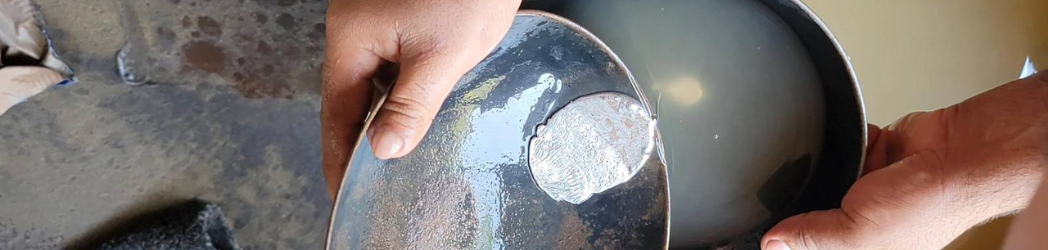
Informal and illegal gold mining now accounts for the vast majority of mercury emissions into Amazonian waterways. Every day across the region, thousands of miners mix mercury with gold-bearing sediments to form an amalgam, which they subsequently heat to vaporize the mercury and extract gold. This process, while rudimentary, is central to illegal gold mining across the region and is the main driver of mercury pollution in the Amazon.
In recent years, hundreds of tons of mercury have flowed into the Amazon—most of it smuggled, as documented by multiple studies including EIA’s latest investigative report Traffickers Leave No Stone Unturned. The convergence of mercury and gold trafficking has effectively created a transnational illicit supply chain comparable in value and organization to narcotics.
Alexander von Bismarck, EIA’s Executive Director, explains: “According to our findings, criminal organizations including drug cartels, armed groups, and militias control many of the trafficking routes to, and within, the Amazon.”
According to EIA’s investigations, the vast majority of the mercury flowing into the Amazon is primary mercury–that is, mercury extracted directly from geological deposits as opposed to mercury recovered as a by-product or recycled from other industrial processes. Von Bismark notes: “The rapid expansion of illegal gold mining in the Amazon, fueled by mercury trafficking from primary mines, represents a breach of the Minamata Convention. The situation demands an urgent and coordinated response from the Parties, as the lives of thousands of people, the integrity of unique ecosystems, and the Convention’s credibility stand on the line.”
In this context, EIA recommends that:
- Parties create an Illegal Mercury Trade Intersessional Working Group in order to facilitate information-sharing regarding illegal mercury flows and the lessons learned from combating national and transnational criminal networks;
- The Secretariat lead on monitoring a pilot mercury mine closure to enhance Parties’ collective knowledge and technical know-how concerning effective mine closure;
- The Secretariat digitize written-consent procedures for mercury imports and make this information available via an online database to facilitate greater transparency, accountability, and traceability;
- Parties prioritize and accelerate the phase-out of mercury mining at the global level – ideally by no later than December 2027 for Mexican mercury mines; and
- Parties remove so-called artisanal and small-scale gold mining (ASGM) from the list of allowable uses for mercury under the Convention.
For media inquiries: Holly Koch, Communications and Media Lead, EIA US, [email protected]