
Illegal Logging Destroying the Brazilian Amazon Feeds EU and U.S. Timber Markets
Washington D.C. – A new investigation by the Environmental Investigation Agency (EIA) has uncovered widespread illegal logging, fraud, and corruption in the Brazilian Amazon, tracing illegal timber from five logging sites in the state of Pará to the European Union and United States. Investigators identified 30 importers that bought the tainted wood, despite laws prohibiting the import of illegal timber and requiring companies to conduct due diligence.
EIA’s new investigative report, Tricks, Traders and Trees, digs into Brazil’s illegal logging industry, delving into sophisticated schemes to fake timber origins by falsifying paperwork and artificially inflating volumes of standing trees to enable laundering. In one case, timber was exported from a protected area where the owner was also illegally mining gold; in another, it was laundered through a site embargoed for illegal deforestation by Brazil’s environmental agency, IBAMA. Twenty-six of the 35 sawmills and exporters that bought the tainted timber have been fined by IBAMA — a sign of systemic abuse. Investigators also uncovered allegations of widespread corruption in Brazil’s logging industry, including bribes paid to enforcement agents and politicians. As one insider put it: ‘Everyone does it’.
The EU and U.S. are Brazil’s largest export markets for timber. Both have laws in place requiring companies to ensure they do not import illegally produced wood – the European Union Timber Regulation (EUTR), which is soon to be replaced by the more stringent EU Deforestation Regulation (EUDR), and the U.S. Lacey Act.
Rick Jacobsen, Senior Manager for policy at EIA US, said “Our investigation shows how illegal Amazon timber is flooding EU and U.S. markets, fueling unfair competition for legitimate companies despite laws banning the trade in illicit wood. European and U.S. consumers don’t want to walk on the remnants of illegally cut rainforest when strolling their local seaside boardwalk.”
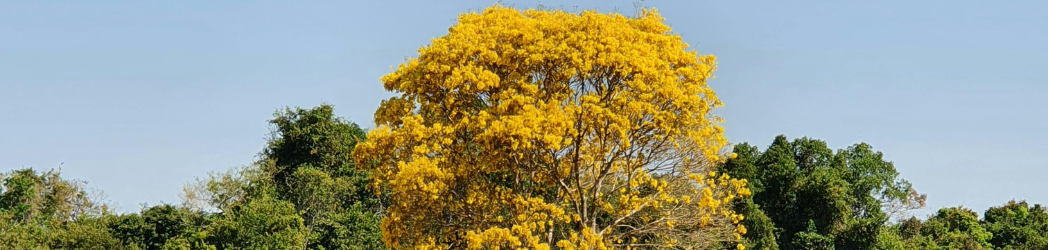
Among the most traded and highest valued timbers is ipê (Handroanthus spp.), a dense tropical hardwood sought after for its durability, which is commonly used for outdoor decking, including in large public construction projects such as the Long Island boardwalk in New York. Ipê trees have become increasingly rare due to excessive logging and are protected by the Convention for International Trade in Endangered Species of Flora and Fauna (CITES).
A 2019 European Commission Expert Group report confirmed the extremely high risk of importing Amazon timber from Brazil and warned that importers would need to apply additional due diligence measures.
EIA’s findings come amid new efforts in the EU to weaken recently enacted due diligence requirements for European companies and a decision last December to delay implementation of the EUDR by one year. In the U.S., resources for environmental law enforcement are seeing unprecedented cuts. “This is not the time to water down or weaken enforcement of legal requirements for EU and U.S. companies to ensure they aren’t buying illegal wood. We need more, not less, scrutiny on this high-risk timber trade that is trashing the Amazon rainforest,” said Jacobsen.
Brazil will host the United Nations climate summit (UNFCCC CoP 30) in November and has announced ambitious targets to further curb deforestation and reduce emissions. Chris Moye, Latin American Expert at EIA US, said ”Cracking down on rampant criminal logging, which often acts as a door opener to complete deforestation, will be crucial for Brazil to reach its climate targets”.
The investigative report calls for immediate and robust action including traceability and transparency in timber supply chains, stricter enforcement and penalties in Brazil and destination countries, and improved international collaboration to protect the Amazon rainforest from ongoing environmental crimes.
###Contact: Denise Stilley, Head of Communications, EIA US [email protected]