

Unless domestic rosewood and ebony trade in Madagascar are tightly regulated, the country’s rainforests are still in jeopardy
WWF, Transparency International and the Environmental Investigation Agency (EIA) commend the work Madagascar has undertaken with the support of the Timber Advisory Group to develop a protocol for inventorying and securing two of the “Official” stockpiles of Malagasy rosewood and ebony logs. However, the two stockpiles represent only a small proportion of the estimated 30,000 logs that are slated for domestic trade. Given the value and demand for Madagascar’s rosewood and ebony, CITES must stipulate clearly that only inventoried and secured logs in the two piles can be traded as a pilot project. Participation of Malagasy civil society at all stages of the pilot, strict measures for accounting for logs removed from the piles, exemplar public transparency regarding timber flows, and state-of-the-art tracking methods must be employed.
The Consultative Group convened to oversee Madagascar’s work must be reconvened before any domestic trade is allowed to take place and remain in place until all 30,000 logs from the Official Stockpiles are inventoried and secured in a locked facility; preferably one overseen by an independent third-party. Both Madagascar and the Consultative Group must report back to the Standing Committee on the pilot project at the 79th Standing Committee Meeting.
The Consultative Group should also work with Madagascar on ensuring that no logs other than from the two stockpiles are used for either domestic governmental projects or by artisans to create handicrafts. Madagascar with the help of the Consultative Group should employ inspections and enforcement activities to detect any use of logs from other stockpiles or freshly cut trees in domestic trade. than logs from the two inventoried stockpiles. Should illegal trade be found to increase or if it is found that logs from other stockpiles or freshly cut trees are being used to create handicrafts or for governmental projects, all trade should be stopped until all seized stockpiles are fully inventoried, securely stored, and transparently managed. Anything less would set a dangerous precedent and fuel further corruption in Madagascar’s already fragile governance of natural resources.
Madagascar has long faced challenges in controlling illegal logging, which threatens biodiversity, accelerates deforestation, and undermines international conservation efforts. Allowing domestic trade from unsecured stockpiles could allow laundering of logs from undeclared stockpiles and freshly cut trees that are of illegal origin. More importantly, it presents a credible risk that freshly felled logs could be laundered through the system, further degrading the UNESCO World Heritage Site known as the Rainforests of the Atsinanana (currently listed as “in danger” by UNESCO), and resulting in loss of habitat, as well as direct poaching of critically endangered endemic lemurs.
“Allowing any form of rosewood trade in Madagascar, whether international or domestic, without first ensuring a complete and transparent inventory of seized stockpiles is an open invitation for illegal logging to resume at full scale, said Ketakandriana Rafitoson of Transparency International. We need sustained actions and strong independent monitoring, after years of promises and commitments from the government at the international level.”
The threat to the remaining living rosewood and ebony trees is real. In 2018, the Organized Crime and Corruption Reporting Project (OCCRP) recorded a timber trader stating that 80% of the rosewood smuggled out of Madagascar is logged directly from the protected forests rather than being sourced from existing stockpiles due to the weathering of the logs in the stockpiles. The demand for freshly cut trees will create great incentives to launder freshly cut trees through the proposed domestic trade.
It is still not clear 1) how Malagasy civil society will be involved in the pilot at all its stages, for instance replicating the experience of mandated forest monitors, 2) how the inventorying to date of two stockpiles will be scaled up for all 30,000 logs in the Official stockpiles; 3) how real time information about the timber flow and timber use will be made available publicly. Clarification will also be required as to how logs intended for domestic use will not enter international trade via the exemptions of up to10 kg for handicrafts provided for under CITES rules. The Consultative Group must work with Madagascar to put in place an effective infrastructure that will safeguard all logs in the Official stockpiles and prevent illegal diversion and manipulation of the domestic trade. It must also ensure that adequate financial support is made available to Madagascar for these purposes.
“We call on the Standing Committee to limit any domestic trade to a pilot project involving only the logs from the two stockpiles already inventoried and secured, with the assistance and oversight of the Consultative Group to implement a transparent tracking and enforcement infrastructure, and includes civil society actors,” said Lisa Handy Director of Forest Campaigns, EIA-US. “ We must all work together to protect Madagascar’s irreplaceable biodiversity.”
The coalition urges Madagascar’s authorities with assistance and support of the Consultative Group to strengthen monitoring and enforcement against illegal logging and assist in the development of the safeguards, protocols and practices which will be necessary to create a domestic trade using the Official stockpiles without creating a parallel illegal international trade in rosewood and ebony that endangers the remaining living rosewood and ebony trees.
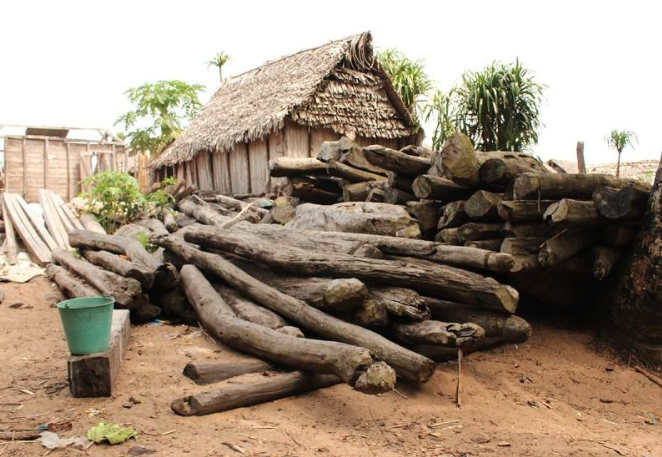
Stockpiles of rosewood and ebony logs are spread throughout Madagascar (photo: OCCRP)