
Illegal Trade Bulletin: Issue 3
Strengthening Action Against Illegal Trade: Insights from International Meetings
Every year, policymakers, industry stakeholders, technical experts, and civil society groups come together for the Meeting of the Parties (MOP) to the Montreal Protocol to discuss and make key decisions for the continued successful implementation of this crucial environmental treaty. This November, discussions began with an extra day of informal meetings focused on how to address illegal trade, improve import and export licensing systems, data collection and reporting, and further build capacity.
Issue 3 of the EIA Illegal Trade Bulletin distills the key outcomes from these policy discussions that are relevant for US industry and policymakers, spotlights a recent international enforcement success, and highlights a new report on licensing systems.
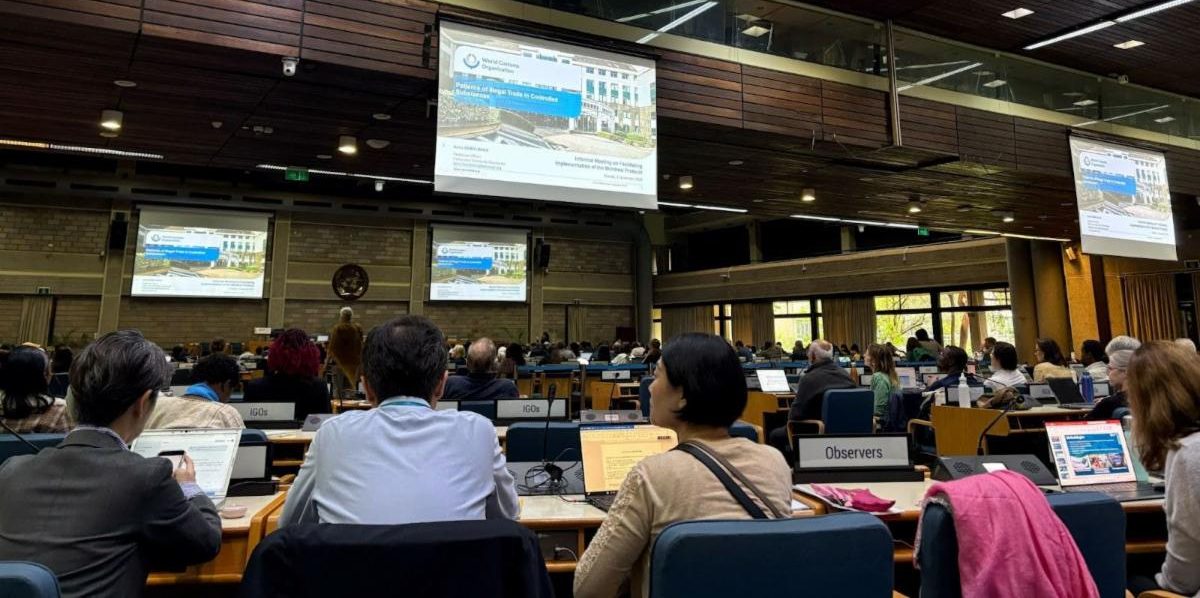
Participants engaged during a presentation at the Informal Meeting on Facilitating Implementation of the Montreal Protocol, on November 2nd at MOP37 in Nairobi, Kenya.
The day before MOP37, a day-long informal meeting was held, covering a range of topics aimed at strengthening the Montreal Protocol’s institutions, including licensing systems, illegal trade, data collection, and capacity. Experts facilitated presentations and discussions, including a session by the US EPA. Presentations given by experts included those sharing insights from national and international experiences on various aspects of licensing systems for imports and exports of controlled substances, the prevention of illegal trade, lessons learned from enforcement actions, effective mechanisms for deterring illegal trade and handling seized refrigerants, and more. Additional discussion breakout groups on each topic were facilitated by expert panels, including National Ozone Unit focal points, customs technical officers, and civil society experts on illegal trade, such as EIA.
Ahead of MOP37, EIA published a briefing on the informal day meeting, providing recommendations and suggested next steps, based on EIA’s extensive experience investigating the illegal trade of ozone-depleting substances (ODS) and super pollutant fluorinated gases.
Key takeaways from this meeting include:
- Preventing illegal trade: Discussions highlighted that prevention is more effective than relying solely on enforcement after illegal trade occurs. Mechanisms like iPIC (discussed below) can help flag potential violations before they occur. Penalties and fines must be adequate to deter illegal activity.
- E-commerce and online marketplaces: The growing role of digital platforms in illegal trade requires strengthened monitoring, enforcement, and guidance. Further measures to digitally track HFCs along the supply chain are essential to prevent illegal trade, including throughout the domestic distribution network.
- Inter-agency and international cooperation and information-sharing: Strengthened dialogue, data sharing, and collaboration is crucial for successful implementation of licensing systems and enforcement at domestic and international levels.
- Capacity building: Continued training, awareness, and necessary inspection tools are essential for customs officers and regulators, including on specific trade-related issues like transhipments and Free Trade Zones. Increased public awareness is a powerful tool for stopping illegal trade.
- Full lifecycle approach: Effectively managing illegal trade requires addressing substances at all stages of their lifecycle, from production, import/export, to proper disposal. A global ban on non-refillable, disposable cylinders would greatly enhance efforts to prevent illegal trade and significantly improve lifecycle refrigerant management. Such a ban must be paired with measures that ensure the return of refillable cylinders, to avoid them being treated like disposable cylinders.
While no formal outcome was reached at this meeting, illegal trade continues to be a priority, and Parties will continue discussions next year, exploring how best to tackle the environmental, economic, and health risks posed by illegal trade as we globally phase down and phase out ozone-depleting and climate-damaging substances.
Enforcement Success
In October 2025, Spanish tax and customs authorities seized a total of 53 tonnes of refrigerant gases and nearly 1 million euros in cash in two enforcement operations, for alleged smuggling and tax violations.
Spanish Tax Agency (Agencia Tributaria) operation, October 2025, images available here.
First Operation:
The second largest seizure of its kind in Spain so far, Customs officers and Tax Agency investigators seized 41,000 kg (90,390 lbs) of refrigerant. The refrigerant was smuggled in three containers, each carrying 1,150 12kg (26.5lb) cylinders of illegal R-134A.
R-134A is a greenhouse gas with a high global warming potential. This single enforcement action averted emissions equal to what 12,433 cars produce in a year or the carbon released from burning over 59,000,000 pounds of coal.
Second Operation:
The second operation involved several arrests and the seizure of 12,000 kg (26,455 lbs) of refrigerant gases, smuggled in cylinders on a truck, worth about 413,000 euros.
This operation acted on intelligence from the European Anti-Fraud Office (OLAF), highlighting the importance of information-sharing and collaboration between relevant authorities and agencies at domestic and international levels to disrupt the illegal networks trafficking these super pollutant greenhouse gases.
The Informal Prior-Informed Consent (iPIC) Mechanism – 2024 Annual Report
 Launched in 2006, iPIC is an online tool that helps countries voluntarily exchange information on intended trade in substances controlled under the Montreal Protocol, helping to prevent illegal shipments before they occur. The secure, access-restricted platform is currently used by 112 countries and the European Union to strengthen implementation of national licensing systems for ODS and HFCs.
Between 2023-2024, there were over 5,800 inquiries into shipments through iPIC, verifying more than 250,000 metric tonnes of controlled substances. This is equivalent to about 424 million tonnes of CO2 equivalent of HCFCs, HFCs, CFCs and other substances.
By using the iPIC mechanism to verify shipments, countries prevented more than 7,000 metric tonnes (11.5 million tonnes of CO2 equivalent) of controlled substances from being illegitimately traded during the years 2010-2024 – that’s equal to the emissions released from burning almost 13 billion pounds of coal.

Although iPIC is well-established as a global voluntary initiative, not all Parties to the Montreal Protocol are registered, like the US. The US is among Parties that voluntarily report on cases of illegal trade in ODS and HFCs to the Ozone Secretariat; however, given that a significant portion of that reported illegal trade in the US originates from exporting countries that are iPIC members (China and Mexico), US participation in iPIC could provide significant opportunities to collaborate on international enforcement actions, and also prevent illegal shipments from even taking place.
iPIC can also help identify discrepancies in reporting or non-compliance with domestic legislation such as the AIM Act. While the US EPA already monitors and takes civil action in such cases, the iPIC mechanism provides an additional tool to flag potential misdeclarations or excess allowance use. This safeguards US industry and consumers from the risks and costs of illegal trade by ensuring that companies following best practices for reporting, record-keeping, and compliance are not disadvantaged by those engaging in bad practices or violating the law. Information exchange through iPIC can even expedite legal trade while preventing illegal or unwanted trade in controlled substances.
Common red flags in rejected iPIC shipments include:
- Exceedance of quota allocated under national licensing systems
- Mismatched names of importing and exporting companies
- Absence of a valid licence
- Submission of false licences or permits
Broader participation in tools like iPIC and stronger international cooperation is essential for closing enforcement and knowledge gaps, and preventing illegal trade in controlled substances before they occur.
Send us a tip
If you suspect illegal activity related to refrigerants, you may share information with EIA by filling out our anonymous form or emailing us confidentially at [email protected].
Report violations to the EPA
Possible violation of environmental laws or regulations may also be reported to the U.S. Environmental Protection Agency (EPA) here. Information about activities that pose an urgent safety or security threat should be immediately disclosed to relevant authorities.