Resources — EIA

Resources

CoP18 Japan Ivory Infographic
Press Release

EIA Denounces Termination of Peruvian Forest Oversight Body President

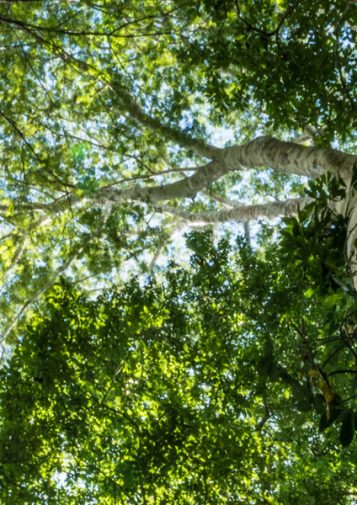
EIA Denounces Termination of Peruvian Forest Oversight Body President, in apparent effort to allow illegal wood to enter the United StatesTo read this release in Spanish, click here. WASHINGTON, D.C.—In response to news today that the Peruvian government is acting to silence its own civil servants exposing the embedded illegal timber mafias in the country, […]

Hong Kong Customs displays 82.5kg of rhino horns from South Africa and destined for Malaysia. Photo: ISD
Blog

EIA releases two new reports on precious woods for CITES SC66

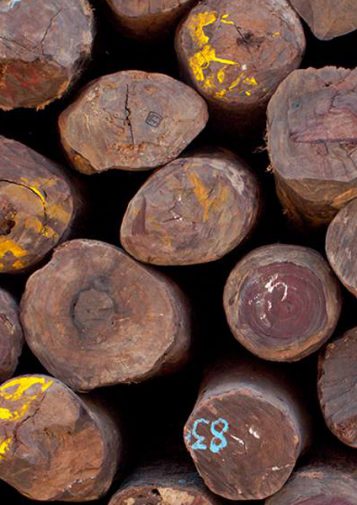
Parties to the Convention on International Trade in Endangered Species (CITES) are gathered this week in Geneva for the 66th meeting of the CITES Standing Committee. On the agenda are critical protections for precious timbers from Madagascar, Southeast Asia, Latin America, and West Africa. EIA has prepared two briefings highlighting the need for CITES member […]

None
Press Release

Japanese Wildlife Official Promoted Illegal Ivory Trade

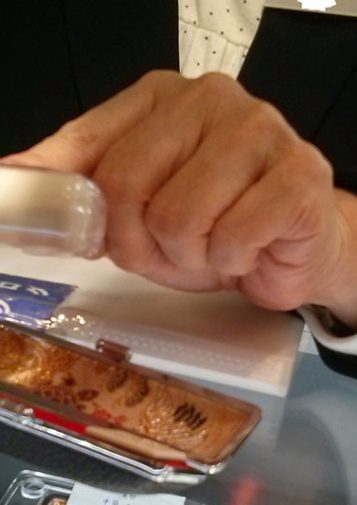
TOKYO—An official at the Japanese government-appointed agency that controls the country’s domestic ivory market is encouraging illegal trade in elephant tusks. The official advised an undercover investigator how to fraudulently register a tusk as legal and how to obstruct a potential police investigation, according to evidence obtained by the non-profit Environmental Investigation Agency (EIA). The […]

Report

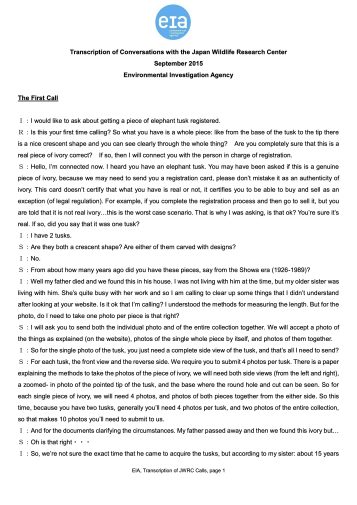
TRANSCRIPT: JWRC Conversations with Undercover Investigator

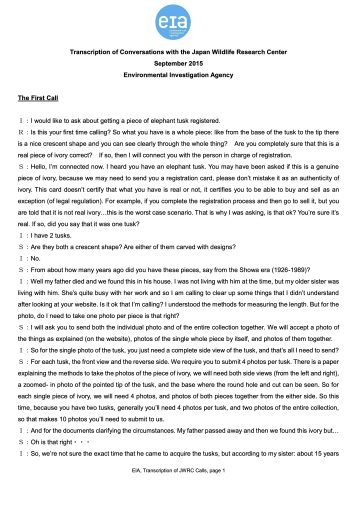
Under Japan’s domestic ivory laws, all persons looking to trade elephant tusks must first register them with the Japanese Wildlife Research Center (JWRC) to prove they were imported prior to the 1989 international ban on ivory trade. However, in several phone calls with EIA investigators in 2015, a JWRC official repeatedly offered advice and suggestions […]

Report

TRANSCRIPT: Key Excerpts from Conversations with the Japan Wildlife Research Center

Under Japan’s domestic ivory laws, all persons looking to trade elephant tusks must first register them with the Japanese Wildlife Research Center (JWRC) to prove they were imported prior to the 1989 international ban on ivory trade. However, in several phone calls with EIA investigators in 2015, a JWRC official repeatedly offered advice and suggestions […]