EIA Exposes Scale of Cattle Ranches in National Parks, Urges Passage of Cattle Traceability Law
The Environmental Investigation Agency (EIA) has uncovered alarming evidence of the scale and impact of cattle ranching in some of Colombia’s most deforested national parks. In 2021, EIA exposed how Colombian supermarkets were linked to cattle ranchers connected to deforestation in national parks and in protected Amazon forests, in addition to funding armed groups, in its groundbreaking report Tainted Beef. In a new analysis, EIA documents the scale of some of the cattle ranches in La Macarena, Tinigua, and Picachos National Parks. EIA’s new briefing A Path to Accountability, highlights the urgent need for systemic reform, starting with the passage of a cattle traceability law. This legislation would prevent deforestation-linked cattle from entering formal supply chains and protect Colombia’s critical ecosystems.
Key findings
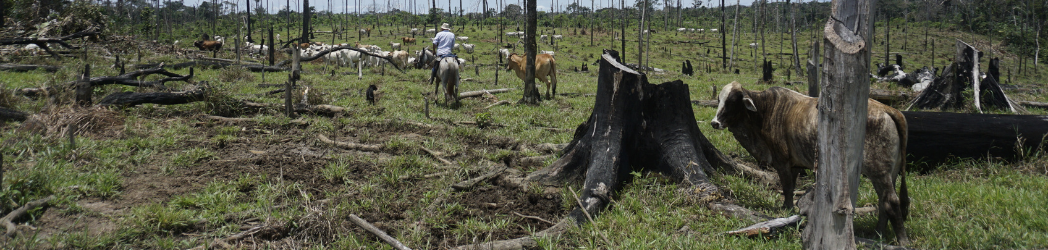
- Cattle grazing in National Parks: Over 24,000 cattle were found grazing in more than 180 ranches within three national parks in 2023 alone, with some ranches containing over 500 cattle.
- Massive cattle transports from rural districts overlapping into National Parks: Between 2020 and 2024, more than 211,000 cattle were transported from districts partially or wholly overlapping the parks. The majority (85%) were moved to other ranchers or cattle markets, where their origins became untraceable.
- Deforestation on the rise: The Ministry of Environment reported a 40% increase in deforestation during the first quarter of 2024, compared to 2023, with cattle ranching identified as a key driver.
- Supply chain transparency gap: Without a robust traceability system, cattle linked to deforestation are mixing into Colombia’s formal markets, including in cities like Bogotá. This gap makes it impossible to know where cattle come from, who is rearing them, and who is driving demand, leaving supply chain actors unaccountable for their links to deforestation and consumers unknowingly complicit in forest destruction.
These findings come at a time when the Constitutional Court of Colombia ruled that cattle ranching, given the links to deforestation, is a matter of general interest to the public so private companies like supermarkets cannot shield themselves arguing confidentiality of the business practice when they receive requests of information related to the origin of their beef supply chains.
“The data is clear: cattle ranching is devastating Colombia’s national parks and fueling deforestation in the Amazon. These parks are not only home to extraordinary biodiversity but also critical in the fight against climate change. Colombia’s Congress now has the unique opportunity to pass a robust traceability bill, allowing the government and civil society to identify and block deforestation-linked cattle from its supply chains. By passing this bill, Colombia would set an important example for the region and the world”, said Susanne Breitkopf, Deputy Director of the Forest Team, EIA US.
A legislative path forward
As the Colombian Congress debates a cattle traceability law, EIA stresses that any system must ensure full accountability across the supply chain, including farms, intermediaries and slaughterhouses. Cattle should be tracked from birth to slaughter using unique identifiers such as ear tags. Data should be verified through a secure digital system, incorporating GPS-enabled mobile apps that also work offline since many rural areas have limited internet access. Finally, the data should be publicly accessible in real time, allowing consumers to verify cattle origins and ensuring transparency and accountability throughout the supply chain.
By incorporating these principles, the proposed legislation can prevent deforestation-linked cattle from entering supply chains while distinguishing between large-scale deforestation drivers and subsistence ranchers, ensuring the latter are supported rather than penalized.