NGOs to the European fashion industry: your reputation is at risk
Dear European Fashion Industry,
The sustainability of your leather supply chain is under attack. You have four weeks to defend it.
We all enjoy looking good. That feeling of a new beginning when we put on a new pair of shoes, a new jacket, or a new outfit. But looking good shouldn’t cost us a healthy planet.
You are sourcing leather. Some of it may be tanned in Italy, finished in France, or stitched in Portugal. It carries the provenance of European craftsmanship. Sustainability-minded shoppers look for durable and quality products, and European leather is an obvious choice.
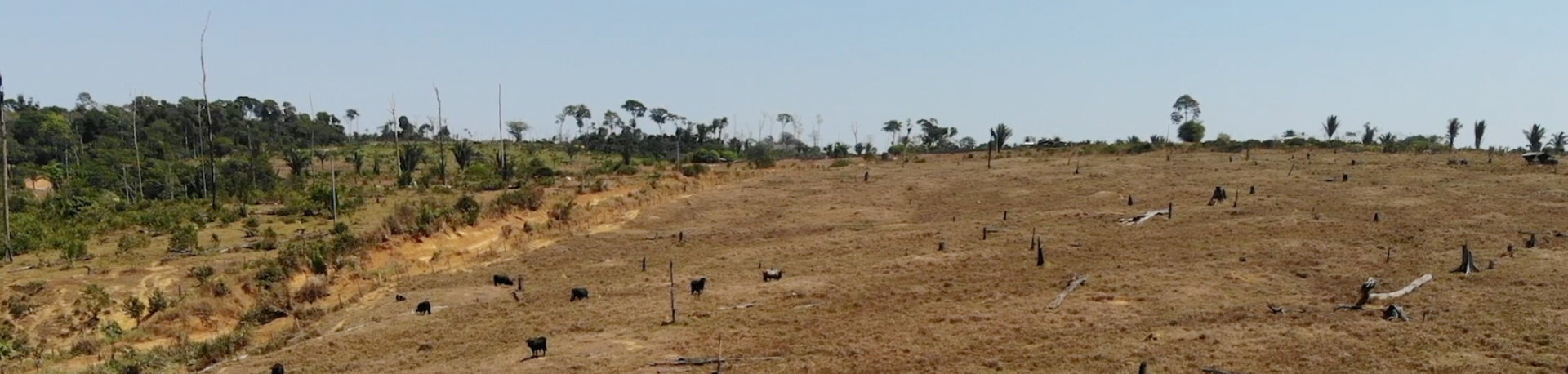
But before leather becomes jackets, bags, or belts, it is the skin of a cow — possibly grazed in Brazil on land that was Amazon rainforest a year ago, stolen from Indigenous Peoples, and cleared illegally by ranchers operating with violence and impunity.
Right now, you cannot prove otherwise. And a well-resourced industry lobby is working hard to make sure that remains the case.
The European Union has a new law that will require companies importing leather and other forest-risk products to verify that they are deforestation-free and free from violence and illegality. But the leather industry is fighting to have leather excluded and the European Commission is about to give in to their demands, floating a proposal on 4 May 2026 to exclude leather from the law.
Only EU-insiders know this is happening, but you need to pay attention. This decision will affect your brand directly and the window to influence this decision is closing fast.
WHAT IS AT STAKE
The new law — the EU Deforestation Regulation (EUDR), requires that raw and prepared hides imported into the EU must be traceable, deforestation-free, and produced legally, including in compliance with laws on land rights, labour standards, and Indigenous Peoples’ rights. It will start applying from the end of 2026.
For any fashion brand selling leather products, this is the only mechanism that can provide credible, independently verifiable assurance that leather tanned in Europe is free of deforestation and human rights abuses. It is a crucial step for the leather industry toward genuine sustainability.
Yet the leather tanning industry, led by COTANCE — the Confederation of National Associations of Tanners and Dressers of the European Community, together with the International Council of Tanners, the International Meat Secretariat, and the International Union of Hides, Skins and Leather Trade Associations, are aggressively lobbying to exclude leather from the rules. [1]
Meanwhile, fashion brands — the businesses that buy the leather, put their names on the products, and bear the legal and reputational consequences — are absent from this conversation. That absence is being interpreted by decision-makers as consent.
WHY THIS MATTERS TO YOUR BUSINESS
The leather industry’s arguments rests on false claims that your suppliers may repeat to you. Each has been directly contradicted by credible evidence.
Leather is not a by-product; it is a driver of deforestation.
The leather industry claims that leather is merely a by-product of the beef industry and not an integral part of the cattle ranching business. This is false. Brazil generates over US$1.1 billion a year in leather exports and the EU is one of its most important markets. [2] In a sector operating on thin margins, hide revenues matter to cattle ranching economics — illegal ranching in the Amazon would be less profitable if the cow hides would not be sold as leather.
There is a clear link between leather and deforestation.
Independent investigations have repeatedly traced European leather supply chains to illegal deforestation and human rights abuses in the Amazon. [3] Cattle ranching remains the primary driver of global commodity-related deforestation, much of it concentrated in Brazil. [4]
Leather traceability is feasible and necessary
The leather industry claims that traceability is simply impossible. This reflects industry resistance to change rather than any genuine technical limitation. EU member states already have cattle identification systems in place. Australia, New Zealand, and Uruguay — major leather exporters — also have national traceability systems compatible with EU requirements. [5] The leather industry is a traceability laggard: other agriculture sectors already have farm to shelf supply chain traceability. Rather than catching up, the leather industry is trying to avoid responsibility. Leather of unknown origin carries legal, commercial, and reputational risks. Traceability is the only reliable way to mitigate them.
YOUR CUSTOMERS WANT DEFORESTATION-FREE LEATHER
Consumers increasingly want guarantees that the products they buy are not linked to environmental destruction or human rights abuses. [6] This is not a passing trend. It reflects consumers’ growing understanding of the global market and the true price of production.
Without a guarantee that all leather tanned in Europe is deforestation-free and legal, you will need to pay for supply chain traceability in order to satisfy consumers that your leather products are not linked to the destruction of the Amazon or the Indigenous communities protecting it. Without the EUDR’s leverage, that traceability will be far harder to build and verify independently. The legal, commercial, and reputational risks of avoiding dirty leather will fall on your shoulders. A single story linking your brand to illegal cattle ranching could undo years of sustainability positioning. “We relied on our supplier’s assurances” will not be an acceptable defence.
The European Commission has opened a public consultation on whether leather should be in or out. It closes on 1 June 2026. It will be your best and possibly last opportunity to express your view on the importance of a sustainable leather industry — one that does not drive deforestation or human rights abuses in Europe or overseas. Do not let the consultation close without your voice in it. [7]
Your customers expect nothing less.
Yours sincerely,
(list updated on 22 May 2026)





















[1] For examples of industry lobbying, see recent publications by COTANCE, “EU rules to minimise deforestation & forest degradation – amendment of Annex I to the Deforestation Regulation,” May 12, 2025, https://www.cotance.com/news/latest/1303-eu-rules-to-minimise-deforestation-forest-degradation-amend ment-of-annex-i-to-the-deforestation-regulation, and “Leather to be excluded from the EUDR: A historic day for the tanning industry”, Press Release 4 May 2026, https://euroleather.com/news/latest/1356-press-release-leather-to-be-excluded-from-the-eudr-scope-a-his toric-day-for-the-tanning-industry; for La Conceria, “We can now make our voices heard for leather to be excluded from the EUDR”, May 8, 2025, https://www.laconceria.it/en/sustainability/we-can-now-make-our-voices-heard-for-leather-to-be-excluded-from-the-eudr/; for the International Council of Tanners, International Meat Secretariat and International Union of Hides, Skins and Leather Trade Associations see https://www.laconceria.it/en/sustainability/a-global-appeal-to-exclude-bovine-leather-from-the-eudr; for an overview of industry lobbying see also Earthsight, “European leather sector tries to evade responsibility despite clear ties to deforestation”, 31 March 2026, https://www.earthsight.org.uk/news/leather-eudr-lobbying.
[2] Brazil’s Ministry of Development, Industry, Trade and Services, CICB, Brazilian Leather, ApexBrasil, “Brazilian exports of Hides and Skins,” December 2025, https://brazilianleather.cicb.org.br/images/uploads/posts/brazilian-exports-of-hides-ans-skins-dec25-eng_ pdf.
[3] In Brazil, see: Earthsight, “The hidden price of luxury: what Europe’s designer handbags are costing the Amazon rainforest,” June 24, 2025, https://www.earthsight.org.uk/news/hidden-price-luxury; Environmental Investigation Agency, “Deforestation in the Driver’s Seat,” December 17, 2022, https://eia.org/report/deforestation-drivers-seat; Global Witness, “Cash Cow: How beef giant JBS’s links to Amazon deforestation and human rights abuses are aided by UK, US and EU financiers, importers and supermarkets,” June 23, 2022, https://globalwitness.org/en/campaigns/forests/cash-cow; Human Rights Watch, “Tainted: JBS and the EU’s Exposure to Human Rights Violations and Illegal Deforestation in Pará, Brazil,” October 15, 2025, https://www.hrw.org/report/2025/10/15/tainted/jbs-and-the-eus-exposure-to-human-rights-violations-and-ill egal; Rainforest Foundation Norway, “Hide on the Highway: Tracing Leather from Brazil to Europe under the EU Deforestation Regulation,” May 2024, https://aidenvironment.org/wp-content/uploads/2024/07/Hide-on-the-Highway-2.pdf; in Paraguay, see: Earthsight, “Grand Theft Chaco: Luxury cars made with leather from the stolen lands of an uncontacted tribe,” 2020, https://www.earthsight.org.uk/grandtheftchaco-en; Climate Rights International, “Before It’s Too Late: Curbing Cattle-Driven Deforestation and Rights Abuses in Brazil,” October 2025, https://cri.org/brazil-cattle-ranching-forced-labor-driving-deforestation-ahead-cop30.
[4] The expansion of cattle pasture accounted for 42% of global deforestation driven by agriculture between 2001 and 2022, converting an area of forest the size of Spain and releasing half of all carbon emissions caused by commodity-driven deforestation globally: C. Singh and U.M. Persson, “Global patterns of commodity-driven deforestation and associated carbon emissions,” Nature Food, February 23, 2026, https://www.nature.com/articles/s43016-026-01305-4#Sec16; Most cattle-driven deforestation happens at the expense of the Amazon rainforest, with cattle expansion in Brazil alone accounting for roughly a quarter of all agriculture-driven deforestation globally during the same time period: see the Deforestation Footprint’s dashboard of the Deforestation Driver & Carbon Emissions (DeDuCE) model — a global dataset linking commodity production to forest loss — and integrated trade models at https://www.deforestationfootprint.earth/.
[5] EU member states, which supply the majority of hides by volume, already have cattle traceability systems in place: see https://food.ec.europa.eu/animals/identification_en). Other major non-EU suppliers also have such systems, including New Zealand: https://nzbovinepharma.com/full-traceability; Australia: https://www.integritysystems.com.au/identification–traceability/national-livestock-identification-system; Uruguay: https://www.inac.uy/innovaportal/file/27008/1/uruguay-beef—eudr.pdf; and the UK: https://www.gov.uk/government/organisations/british-cattle-movement-service/about. Other countries supplying hides to the EU market have also announced similar traceability schemes, such as Argentina: https://alinvest-verde.eu/en_gb/argentina-visec; India: https://rr-asia.woah.org/app/uploads/2023/11/7-ms-versha-joshi_livestock-traceability-v3.pdf; Paraguay: https://www.tridge.com/news/siap-will-bring-great-satisfaction-to-paragu-pmvpau#:~:text=Tridge%20sum mary,AI%20model%20for%20informational%20purposes.
[6] Fern, 21 May 2019, ‘Press release: 87 per cent of Europeans support new laws to combat global deforestation, new poll shows’, https://www.fern.org/publications-insight/article/press-release-87-per-cent-of-europeans-support-new-laws -to-combat-global-deforestation-new-poll-shows-1963/; Greenpeace, 14 December 2020, ‘Over 1 million people tell EU to stop funding forest destruction’, https://www.greenpeace.org/eu-unit/issues/nature-food/45406/over-1-million-people-tell-eu-to-stop-fundin g-forest-destruction/.
[7] European Commission, Have Your Say: Deforestation – Amendments, simplifications, and technical fixes to Annex I, https://ec.europa.eu/info/law/better-regulation/have-your-say/initiatives/18053-Deforestation-Amendments-simplifications-and-technical-fixes-to-Annex-I_en.