Illegal Trade Bulletin: Issue 2
More Than What’s Inside: Counterfeit Cylinders and their Hidden Risks
Cylinders used to transport refrigerant gases like HFCs are an important part of the supply chain. In this issue of EIA’s Illegal Trade Bulletin, we highlight warning signs of counterfeit cylinders, their role in illegal trade, the danger and safety risks they pose, and the importance of industry vigilance and best practices to ensure the health and safety of people and the environment. This issue also highlights a recent enforcement success.
Counterfeit Cylinders for Refrigerant Recovery
In recent years, counterfeit refrigerant cylinders, including both single-use and two-way refillable cylinders used for refrigerant recovery, have been flagged as a growing concern and pose major safety risks.
In January of this year, the US Department of Transportation (DOT) Pipeline and Hazardous Materials Safety Administration (PHMSA) issued a safety advisory that unauthorized cylinders are being filled with hazardous materials and transported as part of business operations. PHMSA identified multiple cases of empty cylinders being sold to consumers, shippers, and HVAC technicians that were neither manufactured to DOT specifications nor UN standards, and lacked required certification markings.
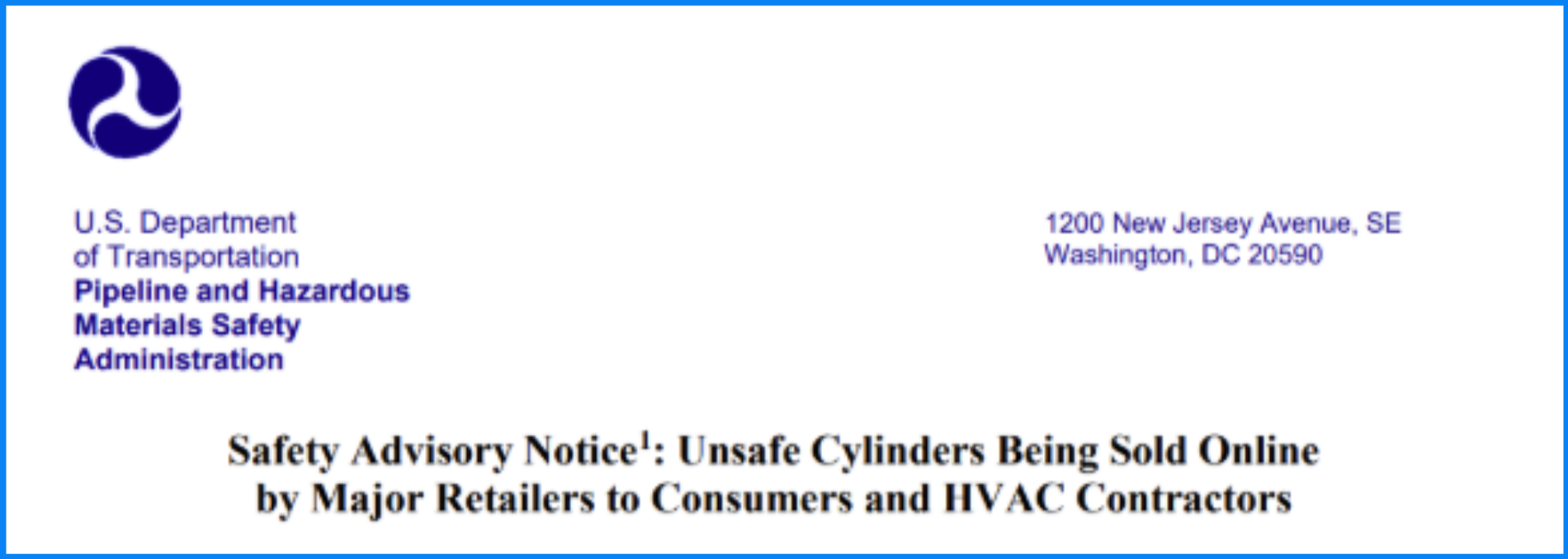
DOT PHMSA safety advisory notice, issued January 2025.
According to PHMSA, these cylinders are primarily manufactured by non-US companies and sold without proper certification, violating the Hazardous Materials Regulations (HMR) of Title 49 of the United States Code of Federal Regulations. Because these cylinders are not designed to safely hold and transport high-pressure gases like refrigerant, they pose significant health and safety risks, including fires, explosions, serious property damage, inhalation injuries, or even death. In addition to these considerable risks, filling unauthorized cylinders is punishable by civil penalty and/or criminal prosecution (49 CFR 107.30).
When technicians recover refrigerant gas during system repairs or replacements, they are required to use authorized DOT or UN certified cylinders. Venting most refrigerants into the atmosphere is prohibited, so recovered refrigerant gas must be sent to EPA-certified reclaimers for additional processing. However, once counterfeit cylinders are filled to store or transport refrigerant to an EPA-certified reclaimer, they are in violation of the HMR requirements.
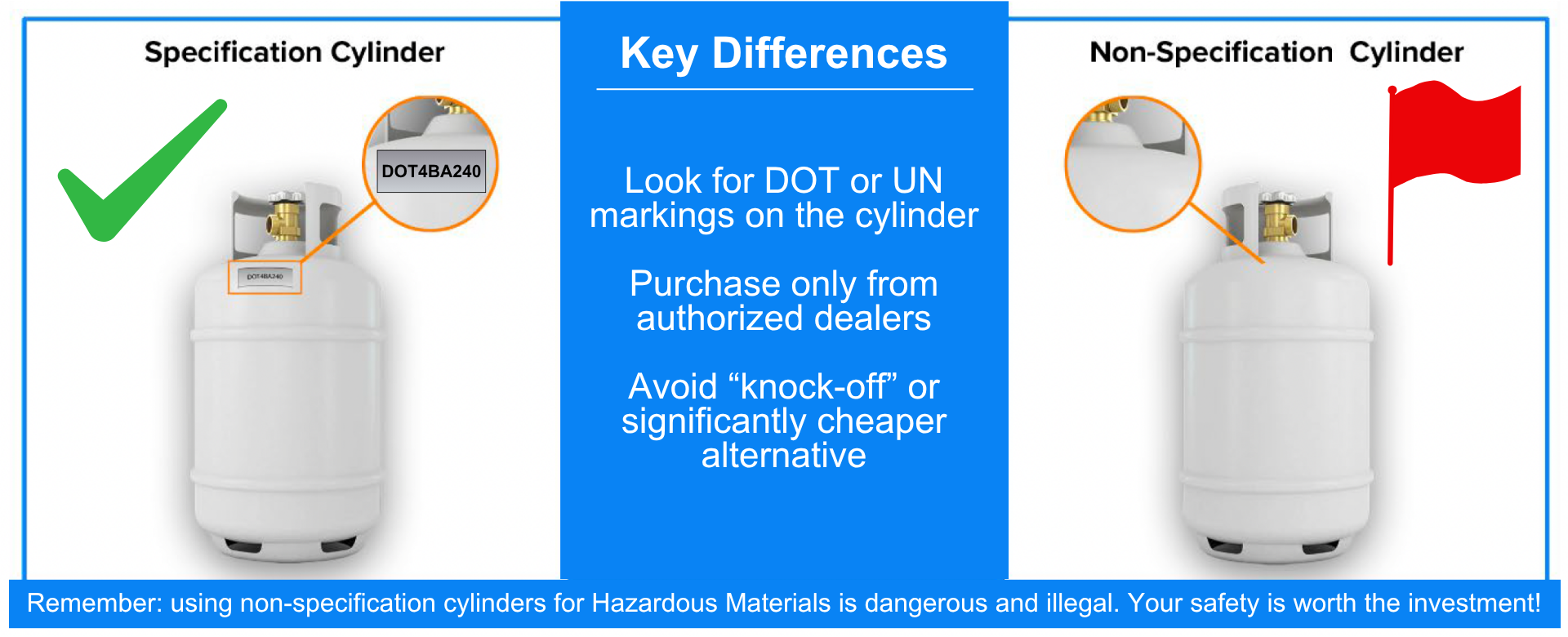
Key differences between specification and non-specification cylinders. Source: DOT PHMSA safety advisory notice, issued January 2025.
Furthermore, cylinders that are in poor condition, or have not been requalified to ensure their ongoing safety and structural integrity, come with similar health and safety risks.
Do not fill any cylinder with refrigerant if it has:
🚩 Excessive rust, corrosion, or pitting on the cylinder, particularly near bottom;
🚩 Dents, bulges, cuts or cracks in the surface;
🚩 Missing or damaged cylinder footring, cylinder neckring (collar), or valve cover; or
🚩 A leaking or defective valve or pressure relief device.
If the cylinder looks to be in good condition, check the manufacturing and requalification dates to make sure it can be refilled.
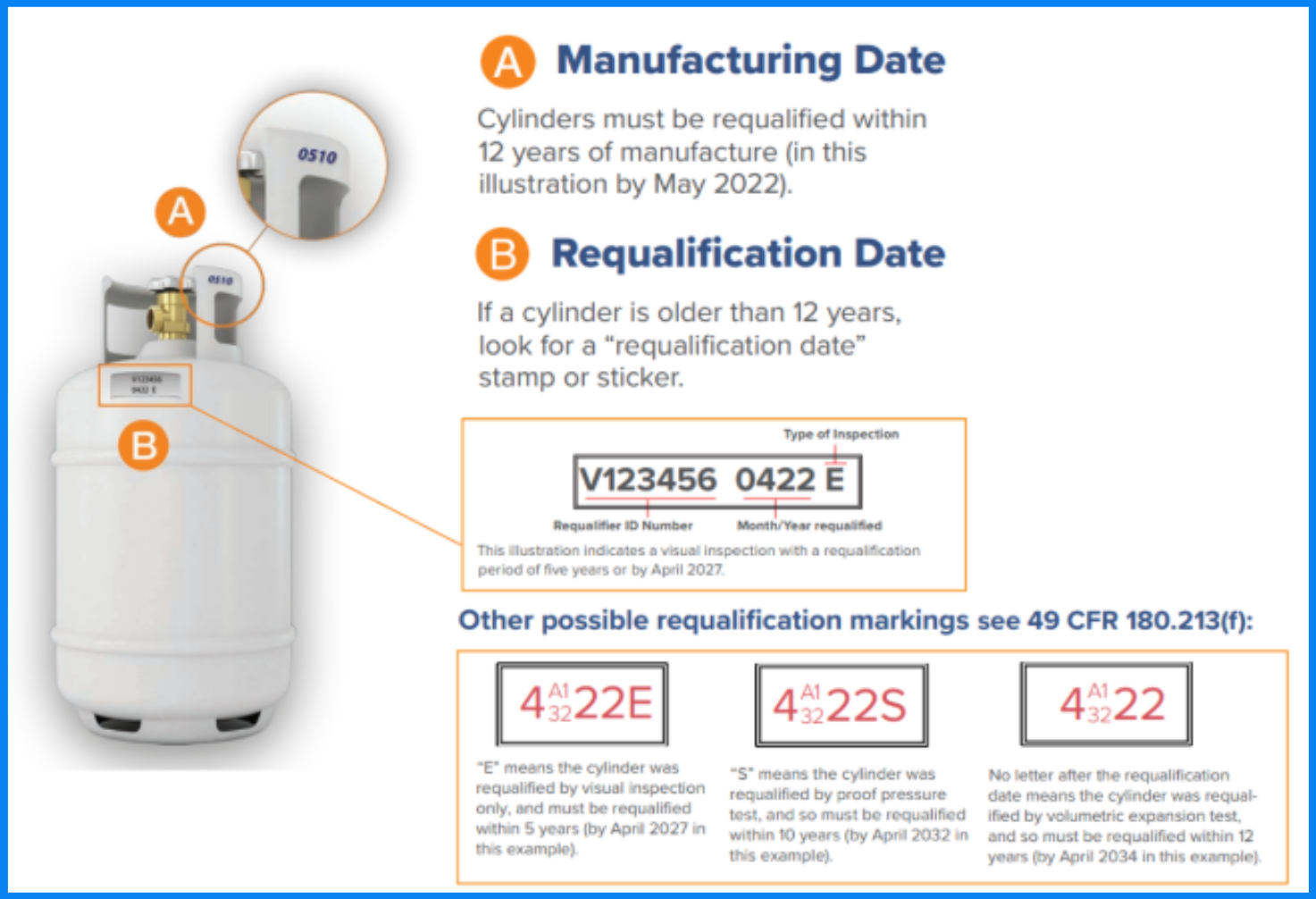
Examples of manufacturing and requalification date markings on cylinders. Source: DOT PHMSA notice, issued August 2023.

Example of empty recovery cylinder sold online. Source: DOT PHMSA safety advisory notice, issued January 2025.
PHMSA recommends that consumers purchasing cylinders on online marketplaces exercise caution, and review product specifications, description, or seller feedback to confirm compliance with DOT regulations. If in possession of an empty counterfeit cylinder, return it to the point of sale. If a purchased counterfeit cylinder has been filled, enlist the assistance of a licensed and trained HVAC technician to ensure proper disposal.
As highlighted in Issue 1, there are potential red flags to watch for when purchasing refrigerant, especially from online marketplaces. Verifying the authenticity of refrigerant or cylinders sold online can be challenging, and online sellers may take steps to disguise the counterfeit nature of their products.
Disposable Cylinders: Vehicles for Illegal Trade
Evidence shows that disposable, non-refillable cylinders are primary vehicles for the illegal trade of banned substances under the Montreal Protocol, including HFCs. Between 2018 and 2020, nearly 90% of illegal HFC import cases reported to the Montreal Protocol’s Ozone Secretariat involved disposable cylinders. Up to 2025, cases using non-refillable cylinders remain among the most common methods of illegal import or export. Over the years, EIA investigations have repeatedly uncovered disposable cylinders being used to transport illegal refrigerants.
For example, in 2001, EIA investigators observed illegal smuggling of ozone-depleting CFCs across the India-Nepal border, bypassing customs checks and using disposable cylinders to transport the gas across the border. The growing availability of CFCs in these disposable cylinders on the Indian market was one of the first indications of illegal CFCs entering the market, as these cylinders were banned. EIA investigators also witnessed the illegal CFCs in disposable cylinders being decanted into the larger reusable cylinders that were widely used in India.
Disposable cylinders are cheaper to manufacture and purchase than reusable ones, and they are almost impossible to trace, making them appealing for those engaged in illegal trade. As part of enforcement efforts, non-refillable disposable cylinders have been banned in several countries, including in the EU, but remain legal in the US.
Protecting public health, safety, the environment, and the interests of US businesses requires industry stakeholders and consumers to be vigilant and raise awareness throughout the supply chain about the dangers of illegal refrigerants and counterfeit cylinders.
It is essential to use best practices when handling refrigerant gas and cylinders. Especially since disposable cylinders require additional steps for safe and proper end of life disposal. After a non-refillable cylinder is emptied upon use, a portion of gas remains at the bottom – the ‘refrigerant heel.’ This remaining refrigerant must be removed by a certified technician or reclaimer to avoid emissions from leaks over time or when the cylinder is crushed or cut. Approximately 1.25 pounds of refrigerant remain in the heel per cylinder, and disposal emissions can equal 5,388,000 MTCO2e per year (EPA), if the heel is completely released from 95% of non-refillable cylinders in the US.
Send us a tip
If you suspect illegal activity related to refrigerants, you may share information with EIA by filling out our anonymous form or emailing us confidentially at [email protected].
Report violations to the EPA
Possible violation of environmental laws or regulations may also be reported to the U.S. Environmental Protection Agency (EPA) here. Information about activities that pose an urgent safety or security threat should be immediately disclosed to relevant authorities.