
Illegal Trade Bulletin: Issue 7
Illegal Refrigerants and the Need for Stronger Deterrence
The seventh issue of the EIA Illegal Trade Bulletin highlights two U.S. enforcement cases.
CEO of HVAC Company Pleads Guilty to Illegally Importing Refrigerants
In the first prosecution of a corporate executive, and the second prosecution in the U.S. under the American Innovation and Manufacturing (AIM) Act, the CEO of Georgia-based HVAC company Extreme Residential, William Randolph Hires, was charged in Newark Federal Court on March 20, 2025 for illegally importing 500 cylinders of climate-damaging HFCs without the required import allowances.
On February 9, 2026, Hires pleaded guilty to violating the AIM Act by importing R-410A into the U.S. without authorization. Sentencing is scheduled for June 17, 2026, and Extreme Residential was administratively dissolved and will not be prosecuted.
According to the arrest warrant, Hires also formed an affiliated company in Lima, Peru to source and export refrigerants. Around April 2022, Hires purchased 500 cylinders of refrigerant in Peru with the intent to export them for use in the U.S. Over the following months, Hires’ employees communicated with U.S. EPA staff, who repeatedly made clear that companies cannot lawfully import regulated HFCs into the U.S. without EPA-issued consumption allowances. These requirements are an essential part of U.S. compliance with the HFC phasedown under the U.S. AIM Act and the Montreal Protocol.
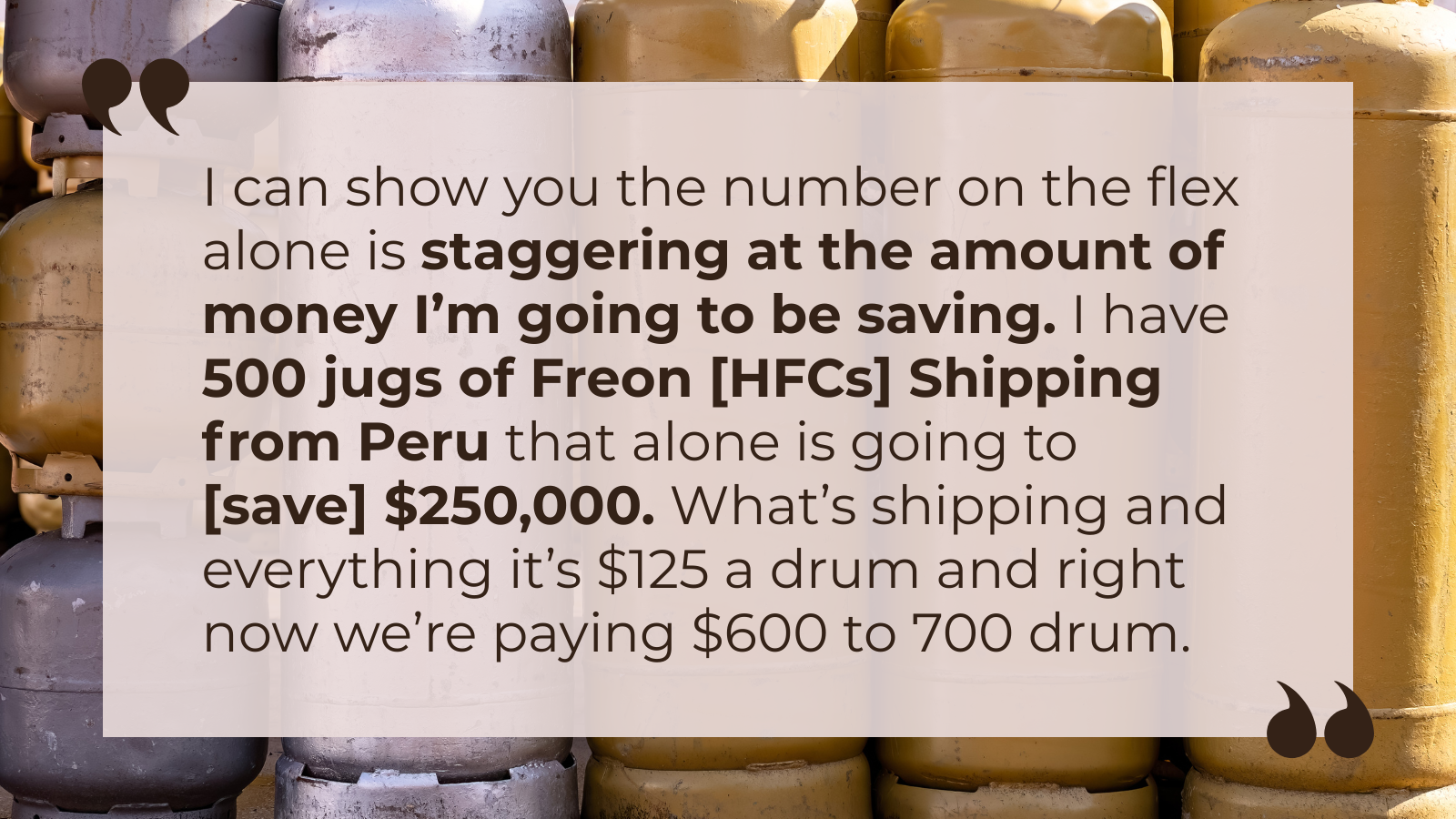
Hires continued with his plans, outlining the scale of his anticipated financial gain in communications with a bank official in Woodstock, Georgia:
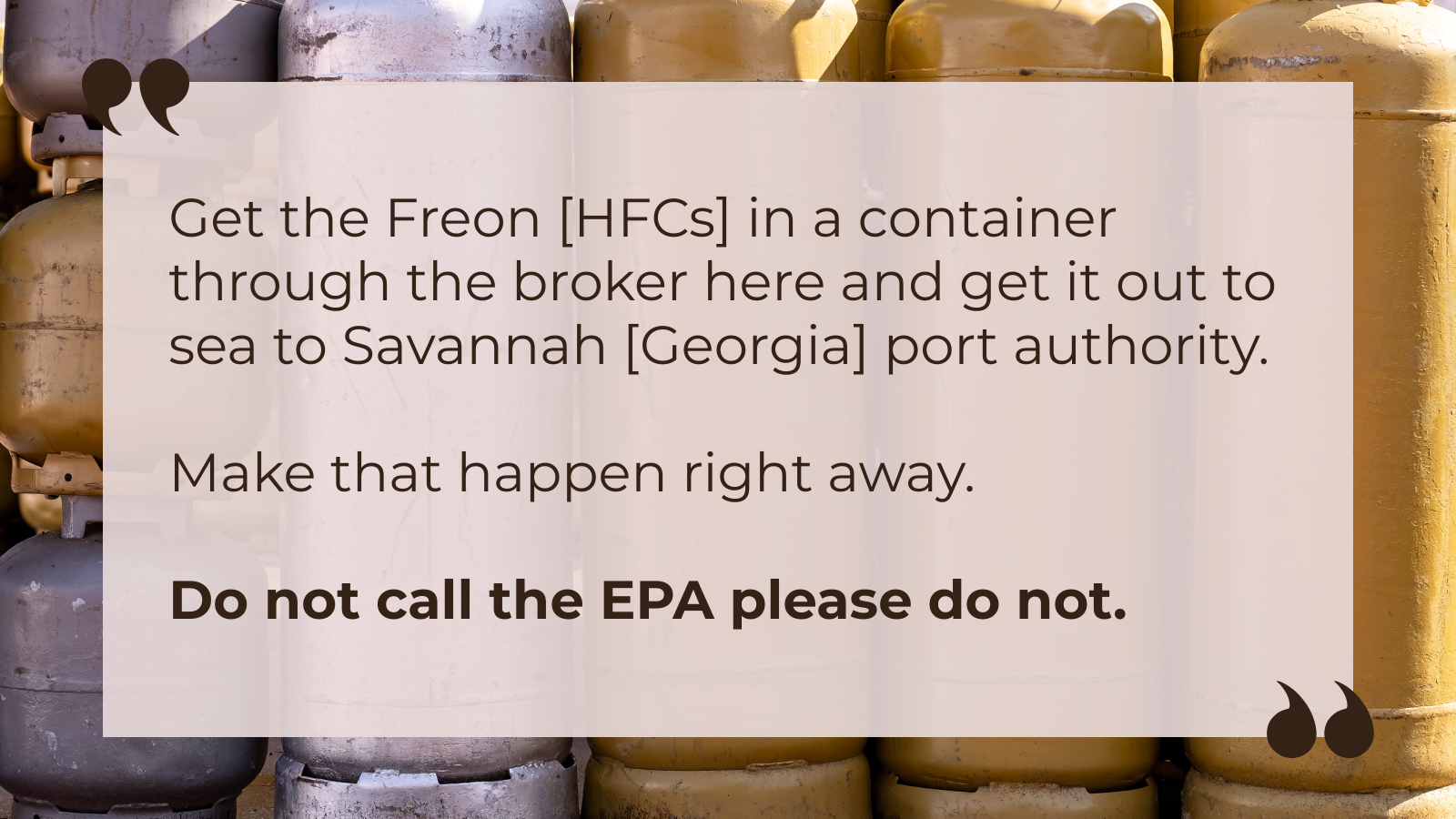
Despite knowing that the import would be unlawful, Hires instructed his employees in August 2022 to proceed, and to avoid further contact with the EPA:
Around April 25, 2023, the shipment was exported from Peru to the U.S., arriving at the Port of Elizabeth, New Jersey around May 11, 2023. The shipment was declared as “500 BOXES LOADED IN 10 PALLETS” of “Mixed Refrigerant (R125+R32)”, R-410A. At EPA’s request, Customs and Border Protection (CBP) detained the shipment for inspection and confirmed the contents via testing.
When the shipment was flagged for customs inspection, Hires contacted CBP and EPA officials falsely claiming there was “some confusion” about the shipment; that he had “checked before doing this to make sure there’s no problems or issues coming into the US”; and even claimed that R-410A is “totally environmental friendly” and has “no bad effect on environment.” Rather, this shipment amounts to almost 11,000 metric tons of CO2e, equivalent to the greenhouse gas emissions from using over 1.2 million gallons of gasoline!
This case shows that companies in the HVAC sector can also play a direct role in or even unknowingly facilitate illegal refrigerant trade, putting customers, technicians, and equipment at risk, and creating unfair competition for legitimate businesses. As the phasedown of HFCs progresses in the U.S., tightening supply and rising prices are likely to increase incentives for illegal trade. Hires anticipated an avoided cost of approximately $475 to $575 per cylinder by illegally importing refrigerant. Strong enforcement, inter-agency collaboration and information sharing, supply chain transparency, and accountability across the HVAC industry is increasingly critical to meet the U.S. HFC phasedown obligations.
Enforcement Success
On February 10, 2026, an individual was sentenced after pleading guilty to smuggling refrigerants into the U.S. in their vehicle. This individual had been stopped at the border on multiple occasions and fined for similar attempted smuggling violations.
In October 2024, authorities in Brownsville, Texas discovered 17 canisters and/or cylinders of refrigerants concealed in the vehicle, including R-410A, R-32, R-134a, and R-125. These are all super pollutant HFCs with GWPs ranging from 675 up to 3,500. This enforcement action prevented these climate-damaging substances from entering the U.S. market. The individual admitted they knew importing HFC refrigerants without proper authorization was unlawful. This individual was also previously stopped in 2023 for attempting to smuggle an “excess amount” of refrigerant in their vehicle, and was fined $5,000 for a similar smuggling attempt in May 2024.
This case demonstrates that inspections, fines, and even criminal sentencing alone may not be sufficient deterrents for those engaged in the lucrative illegal refrigerant trade. Continued vigilance by enforcement authorities is crucial, along with the necessary training, resources, and tools to effectively detect and prevent smuggling.
For businesses and consumers, vigilance is equally important to prevent the use of illegally sourced refrigerants. Red flags like significantly low prices, sales through informal online platforms, noncompliant packaging, or missing proper documentation may indicate that the refrigerant does not meet legal or safety standards. A previous enforcement case showed how smuggled refrigerants can enter the U.S. market and be sold online through platforms like Facebook Marketplace and OfferUp.
Send us a tip
If you suspect illegal activity related to refrigerants, you may share information with EIA by filling out our anonymous form or emailing us confidentially at [email protected].
Report violations to the EPA
Possible violation of environmental laws or regulations may also be reported to the U.S. Environmental Protection Agency (EPA) here. Information about activities that pose an urgent safety or security threat should be immediately disclosed to relevant authorities.