
Seeing the Forest for the Trees
Applications of Artificial Intelligence for Fraud Detection and Compliance in Romania’s SUMAL Database
Romania’s national timber traceability system, SUMAL, is among the best in the world, providing a level of digital traceability and public transparency that far surpasses the capabilities of systems in most other countries. However, it still suffers from widespread fraud and noncompliance.
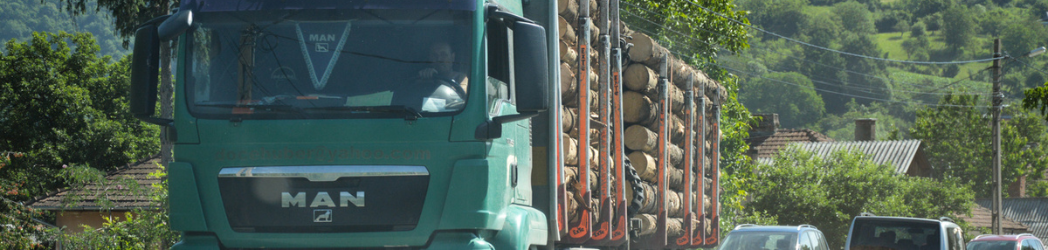
Every day, trucks transport tens of thousands of cubic meters of wood harvested from Romanian forests to processing plants. Romanian law mandates that shipments be tracked in real time in SUMAL, including the submission of clear photographs of a truck’s license plate and timber load.
Journalists and activists previously reviewed small subsets of the more than 50 million photos submitted to SUMAL since 2021 and found that many fail to meet the law’s basic requirements — blank photos, reused photos and photos without license plates are examples of common discrepancies.
EIA expanded on this work by applying several machine learning algorithms to a large collection of SUMAL photos, gathered from across four years of submissions. Our analysis uncovered tens of thousands of illegal submissions, as well as egregious cases of apparent fraud in which photographs appear to show significantly more wood being transported than claimed on the required permit.
We found that some forms of noncompliance in SUMAL appear to be falling over time, while others have not slowed at all. This suggests that substantial improvements are still needed to appropriately enforce the system’s usage.
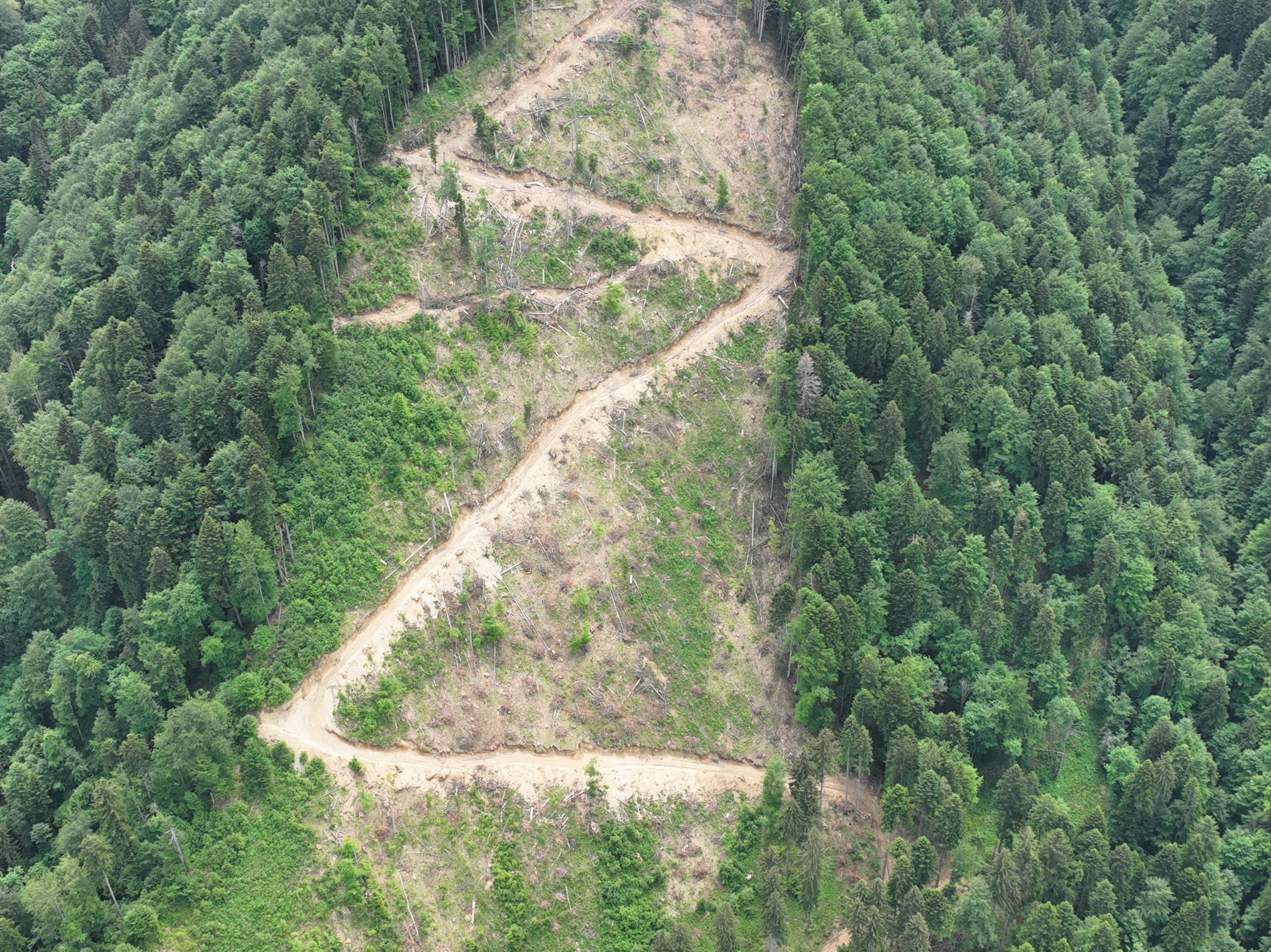
Romania has more virgin and old-growth forests than any other EU country south of Scandinavia. These forests — often referred to as the “lungs of Europe” — provide refuge for brown bears, wolves, and lynx and store vast amounts of carbon. But these forests continue to face severe threats; corruption and manipulation of forest management systems drive severe illicit logging and deforestation practices. A 2019 analysis, confirmed by the Romanian Minister of Environment, found that 20 million cubic meters (706 million cubic feet) of wood are illegally cut every year in Romania.
In response to domestic and international backlash, the Romanian government developed its timber traceability system, SUMAL, in 2014 to combat illegal logging. With mandatory digital reporting of timber transport data, this system was intended to improve traceability to the logging industry. However, loopholes and weaknesses in its enforcement mechanisms allow for ongoing manipulation, illegal logging and timber trafficking. Public outrage in Romania led to the development of the Forest Inspector in 2016, a mobile application and online geoportal that makes SUMAL data available to the public in real time. This created a direct-action mechanism for Romanians to engage in opposition to illegal logging. Media and civil society investigations used Forest Inspector data to highlight ongoing enforcement gaps, and in response, the Romanian government launched SUMAL 2.0 in early 2021.
Romanian law requires that for each load of timber and lumber transported — including logs, planks, firewood, boards and woodscraps—the transporter must report and submit specific data to the SUMAL system. Each SUMAL submission includes the license plate number of the truck; the sender and recipient of the woodload; wood species; volume; type of wood harvested/transported (e.g., log, plank, shavings); and photos of the front, back, and side of the truck. From the Romanian government’s official legislative portal (translated with DeepL):
If the photographs have not been taken directly on the means of transport, but have been taken on electronic devices or other media, the transport is considered as without legal origin.”

Several organizations, including EIA, have studied the content and quality of the submissions to the SUMAL system. This research shows a range of issues, including that one of Romania’s largest sawmills has historically sourced timber from protected areas, more than a quarter of registered transports in SUMAL 2.0 were non-compliant as of 2023, and “cloned photos” are commonly submitted.
Previous investigations on fraudulent, non-compliant, and falsified submissions to the SUMAL system completed by the Organized Crime and Corruption Reporting Project (OCCRP) focused primarily on duplicate images: photos taken of a photo. In one report studying transports by a single logistics company, OCCRP found that at least 244 of 7000 posts between April 2022 and November 2023 had seemingly falsified photographs, a violation of both Romanian law and European Union regulations. We expanded on this work by analyzing over 50 million photos submitted to SUMAL between 2021 and 2025.
Investigations have also shown that “overloading,” or misreporting the actual volume of transported timber, has become a primary method for bringing illegally harvested wood to market. This is a pronounced issue: WWF video-monitoring investigations found that roughly one in five transports registered in SUMAL exceed declared volumes by more than 20%. EIA dug deeper into this issue by using machine learning to estimate the volume of wood in a subset of photos, and we also found that underdeclared loads were common.
Much like the automation of photo analyses for compliance evaluation, artificial intelligence offers a promising pathway to root out overloading, and it has the potential to fundamentally reshape timber traceability. Some reports show that Romanian authorities are already moving to deploy artificial intelligence in an enforcement context: an €8.9 million initiative is planned to deploy 350 video monitoring points equipped with smart cameras to cross-check transport data against SUMAL records, but it is not clear when this system will be implemented.
On a limited sample of SUMAL submissions, EIA’s analysis successfully identified dozens of submissions where the volume in the photographs was clearly greater than the volume reported through the tracking system, confirming that it is possible to identify overloaded trucks with only the low-definition photographs saved in SUMAL.

Methodology and Findings
EIA’s analysis explored the use of machine learning to build upon the previous work done by EIA, OCCRP, WWF and others, examining the type and frequency of fraud and noncompliance in submissions to SUMAL.
One of two models created by EIA focused on one of the aforementioned legal photo submission regulations: that one of the photos in each submission must include the registration number, or license plate, of the truck.
To determine how many submissions failed to meet this basic requirement, investigators trained a convolutional neural network-based machine learning model to identify whether a given photo contained a license plate. The model was based on the object-detection framework YOLO11S and was fine-tuned on a license plate training set of SUMAL photos assembled by EIA. This model was deployed on about 50 million photos, submitted between January 2021 and May 2025.
We supplemented this analysis with a perceptual hash-based duplicate check, wherein we converted all photos to a unique numerical code that captures its overall visual structure. Similarity in the codes implies similarity in the structure of the image, and this was used to find duplicate and near-duplicate photos in our set.
EIA’s model identified 104,360 transportation permit submissions that did not have a license plate in any of the three photos. In many of the photos, the quality or composition made it difficult for even a human reviewer to determine whether there was a license plate.
It is worth noting that the model is not 100 percent accurate, so there were instances where it missed a license plate that a human reviewer identified. An example mistake by the model is shown here:

Though blurry and angled, there is clearly a license plate in the center of the bar across the back of the truck.
There are also less clear images, like this one:

Though the model did not identify the license plate, it is (barely) visible between the two headlights. EIA conducted a manual review of a random sample of 3,000 submissions (over 9,000 photos) and counted all ambiguous photos as having a license plate to produce a conservative accuracy rate estimate of 77 percent. This suggests that about 80,000 submissions in the system — about two full weeks worth of submissions, encompassing over 240,000 photos — were missing license plates over the four and half years of data in our study.
We prioritized avoiding false negatives while training the model, so we expect that the true number of submissions that did not meet this basic requirement is much higher. The number of submissions without a license plate photo identified by our model has declined steadily over time but remains significant.
Through this analysis, EIA investigators uncovered alarming rates of noncompliance in other areas of the regulations surrounding the SUMAL system. As discussed, the rear photo of each truck is required to include the entire timber load and the license plate. This requirement appears to be commonly evaded; SUMAL submissions we investigated often included heavily cropped photos that showed little or no view of the timber load.

Additionally, EIA’s review unearthed thousands of submissions that, beyond obfuscating the truck and timber load, actually showed nothing at all. These submissions were accepted by the system.

In a similar vein to OCCRP’s work, EIA investigators also found dozens of duplicate photos. We expect that a specialized model built for this purpose would identify many more duplicates than our hashing solution.
Similarly, our review of a subset of photos revealed several examples of glare artifacts that seem to indicate fraudulent photos of photos uploaded to the system. These examples could also be used to train a different model to identify suspicious reflections or glare across the entire SUMAL dataset.
Example I: See glare & reflection in the first and third photos
Example II: See reflection of fingers in the first photo

Example III: See pixelation patterns in the second and third photos

Identifying overloaded trucks
Romanian media and civil society have identified numerous cases of logs trucks that appeared overloaded far beyond the wood volume declared to SUMAL. Both the transport and the receipt of such overloaded wood is illegal under Romanian law, which requires a variance of less than 2 to 4 percent, depending on the size of the load. EIA trained a second model that addresses this issue. The model sought to use each submission’s photos to estimate the volume of wood in the truck and compare it to the reported volume in the transport permit. This posed a more complex problem than the license plate identification; estimating a three-dimensional volume from low-resolution, blurry, and partial two-dimensional photos of timber loads without knowing the dimensions of the trucks or trailers is extremely challenging.
Utilizing data from the SUMAL system, investigators trained a vision transformer to predict volume for shipments of roundwood (lemn rotund). In practice, the model processed the photos of the timber and calculated a weighted average of the photos based on the learned usefulness of photos with different types of content. More specifically, investigators programmed the model to learn to prioritize full, clear images of the timber over images that are blurrier or obscured. Wood species was included as a predictive input, and the model’s final result was an estimated volume in cubic meters (m3).
After three training runs using more than 620,000 images, the model achieved a mean absolute error (MAE) of 1.3 m³. This means that it could estimate shipment volume to within approximately ±1.3 cubic meters on average using only submitted photos and timber species.
EIA deployed the model on a random sample of 3,000 SUMAL submissions and identified negative outliers — transporters who claimed a volume on their permits that was much less than the model’s estimate. These outliers, which made up about 5 percent of the sample, provided many examples of clear overloading.
Example I:
- Reported Volume of 3.46 cubic meters
- Predicted volume of 15.58 cubic meters
- Reported-Predicted Volume: -12.12 cubic meters

Example II:
- Reported Volume: 4.18 cubic meters
- Predicted Volume: 18.39 cubic meters
- Reported-Predicted Volume: -14.21 cubic meters

Example III:
- Reported Volume: 6.29 cubic meters
- Predicted Volume: 21.56 cubic meters
- Reported-Predicted Volume: -15.27 cubic meters

This model appears to be very effective at finding instances of timber overloading fraud. A preliminary time-series analysis of outlier rates (defined by a difference from the reported volume of 1.5 standard deviations below the mean) found that rates of overloading have not decreased over time.
This model is just the first step in identifying overloading fraud, but EIA’s limited deployment already uncovered many examples of Romanian timber that seems to have been transported illegally due to volume misrepresentation. A broader application of this model, combined with targeted government enforcement in Romania and other countries with similar digital traceability systems, could strengthen legal compliance and reduce or prevent widespread illegal logging.
Conclusion and Next Steps
EIA developed the machine learning models described above as proof of concept and to further investigate and verify problems previously identified in SUMAL submissions.
Our results indicate that both license plate detection and volume estimation can be accomplished with reasonable accuracy. The release of many high-quality machine learning models in recent years makes it possible to develop specialized model versions with minimal training costs. Outputs from these models can help journalists, law enforcement, and other investigators identify specific SUMAL submissions that fail to meet the criteria established by Romanian law. Artificial intelligence and machine learning can now be used to both uncover past fraud and identify it in real time.
The SUMAL national timber traceability system in Romania was the first of its kind and laid the foundation for other countries to implement similar tracking systems. Using SUMAL as a model, EIA developed an open source transparent timber tracking system that is being tested and implemented in Africa and Latin America.
Publicizing the tracking system data enabled the Romanian public to track logging across the country and directly led to decreases in unregistered timber transports. Still, missing information and the large volume of daily recorded transports makes sifting through the data difficult. The use of machine learning strategies offers an opportunity to more efficiently and effectively identify submissions that do not meet the law’s basic criteria and root out some of the common, simple fraud techniques that enable evasion of Romania’s forest protections.