
A deep dive into the wins and losses for wildlife and forests at CITES SC78
Covering one packed agenda, four interventions and six hectic days, EIA campaigners share the highlights from CITES SC78 in Geneva.
- Areas of work:

Covering one packed agenda, four interventions and six hectic days, EIA campaigners share the highlights from CITES SC78 in Geneva.

WWF, Transparency International, and EIA call on Madagascar and CITES to clearly regulate the country’s domestic rosewood and ebony trade, stop well-known traffickers, and strengthen timber flow transparency, while involving Malagasy civil society.

Japan’s domestic ivory market is the largest in the world and should continue to be evaluated for compliance by CITES Parties.

EIA will be actively engaging at SC78 on a range of key issues relating to the protection of elephants, rhinos, Asian big cats, pangolins, vaquita porpoises and trees.
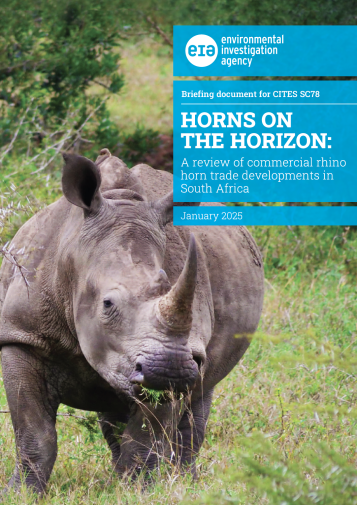
South Africa should abandon plans to build a domestic rhino horn market, and instead fully embrace collective efforts to implement the CITES ban on commercial rhino horn trade and prioritize eliminating the systemic drivers of rhino poaching and trafficking.
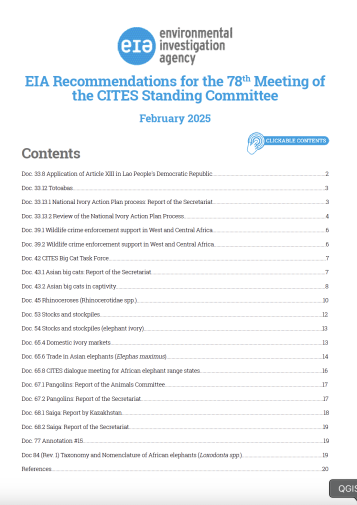
Learn more about EIA's priority issues and recommendations for Parties at CITES SC78.