Illegal Trade Bulletin: Issue 4
Illegal Refrigerants: A Dual Threat to Climate and Safety
The illegal trade of refrigerants takes many forms, from counterfeit products and misdeclared shipments to sophisticated smuggling routes. These practices create unfair competition that threaten business interests, weaken compliance with environmental and climate protections, and risk harming the environment as well as workers and consumers.
The fourth issue of the EIA Illegal Trade Bulletin highlights the discovery of falsely labeled counterfeit refrigerants in Canada, several recent enforcement actions both international and domestic, and a recent capacity building workshop for strengthening enforcement in the Philippines. These examples show the evolving risks of illegal refrigerant trade and the critical role of effective enforcement and training to address them.
Enforcement Success
Following an investigation by the US EPA Criminal Investigation Division (CID) and Homeland Security Investigations (HSI), a person was convicted on September 12, 2025, of importing regulated refrigerant gases in violation of the Clean Air Act.
Customs and Border Protection (CBP) officers stopped this person at San Ysidro for attempting to smuggle ozone-depleting HCFC R-22 in their vehicle. Notably, this individual held a Universal EPA certification authorizing technicians to handle refrigerants. This enforcement case demonstrates why vigilance throughout the refrigerant supply chain is essential, and technicians, distributors and consumers should ensure that refrigerants are sourced from credible, authorized sources.
In the US, the production and importation of R-22 are banned due to its extremely detrimental effects on the ozone layer, the environment, and to human health, but can still be lawfully procured in the US if purchased as recycled or reclaimed gas through authorized channels. Illegal refrigerants bypass these regulations, to the detriment of legitimate businesses, environmental protections, and human health and safety.
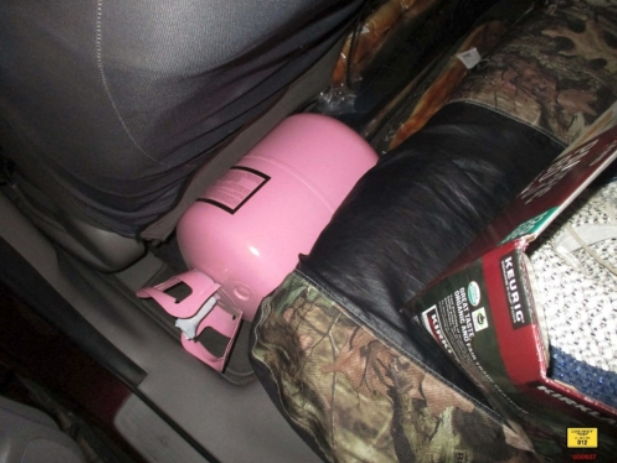
Exhibit photo from the trial, showing a cylinder of R-22 that the defendant attempted to smuggle into the US.
Falsely Labeled Counterfeit Refrigerants
In December 2025, Environment and Climate Change Canada (ECCC) issued a warning to HVAC technicians, service providers, and refrigerant importers about counterfeit refrigerants entering the Canadian market. These cylinders were falsely labeled and sold as R-410A (a mixture of greenhouse gases HFC-32 and HFC-125), but found to actually contain a mixture of R-40 (methyl chloride or chloromethane) and hydrofluorocarbons (HFCs). R-40 has been found to be explosive in many HVAC systems, which, in addition to the safety concerns, may lead to the leakage of HFC emissions to the atmosphere. R-40 is cheaper to produce than HFC refrigerant blends and though it has very different chemical and safety properties to R-410A, it can exhibit similar phase-change behaviour refrigerants in HVAC systems in the short-term, making it particularly lucrative for use as a counterfeit refrigerant.
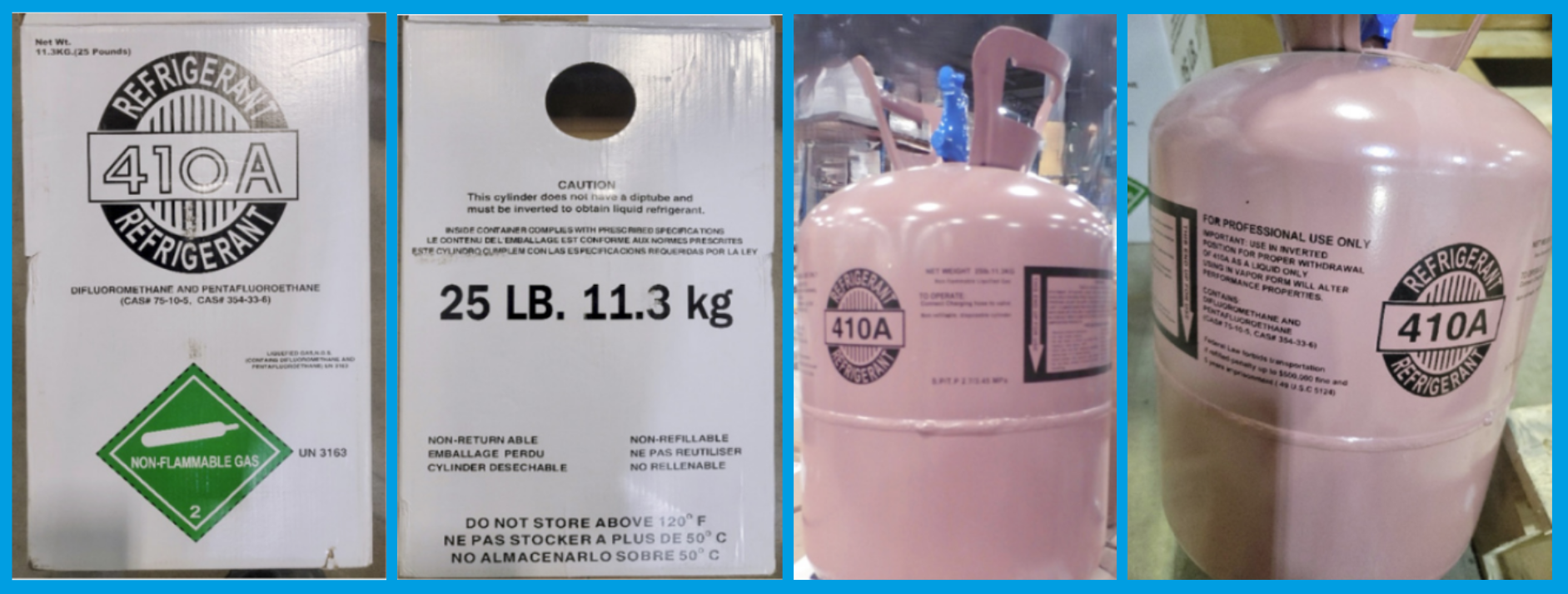
Counterfeit refrigerant found in Canada, falsely labeled as R-410A. Source: Environment and Climate Change Canada, Enforcement Branch, December 2025
The ECCC warns that R-40 poses serious risks to human health, even with brief exposure to high concentrations. Furthermore, inside HVAC systems, flammable and corrosive R-40 can react with other materials, generating toxic compounds that can result in explosive chemical reactions during servicing. The use of refrigerant contaminated with R-40 poses risks for equipment, negatively affecting cooling performance and energy use, shortening equipment operating life, voiding equipment warranties, equipment failure, and even leading to threats to human safety.
As underscored in previous EIA bulletins, staying informed and vigilant is a necessity when buying and using refrigerant, to keep people, the environment, and equipment safe. There are potential red flags to watch for, especially when purchasing from online marketplaces as it can be difficult to verify authenticity.
Similarly, both the ECCC and the US EPA (Environmental Protection Agency) provide tips to detect and avoid counterfeit refrigerants, such as ensuring an accountable supply chain with authorized distributors and visually inspecting refrigerant packaging and cylinders for misspellings, missing labels or markings, or charging valves/apertures that are incompatible with the expected refrigerant. It is recommended to verify the refrigerant in HVAC systems prior to repairing or servicing equipment, with the use of a portable infrared analyzer or halide torch testing. In Canada, refrigerant in disposable cylinders is a red flag, as imports of bulk HFC refrigerants must be authorized and stored in refillable containers.
Enforcement Success
On November 20, 2025, Hong Kong Customs and the Environmental Protection Department (EPD) intercepted a large shipment of suspected smuggled refrigerants during a joint operation in Kwai Chung. Acting on intelligence analysis and risk assessment, officers identified the suspicious seaborne container and seized approximately 1,300 cylinders of refrigerant, with an estimated market value of HK$6.4 million (US$822,000).
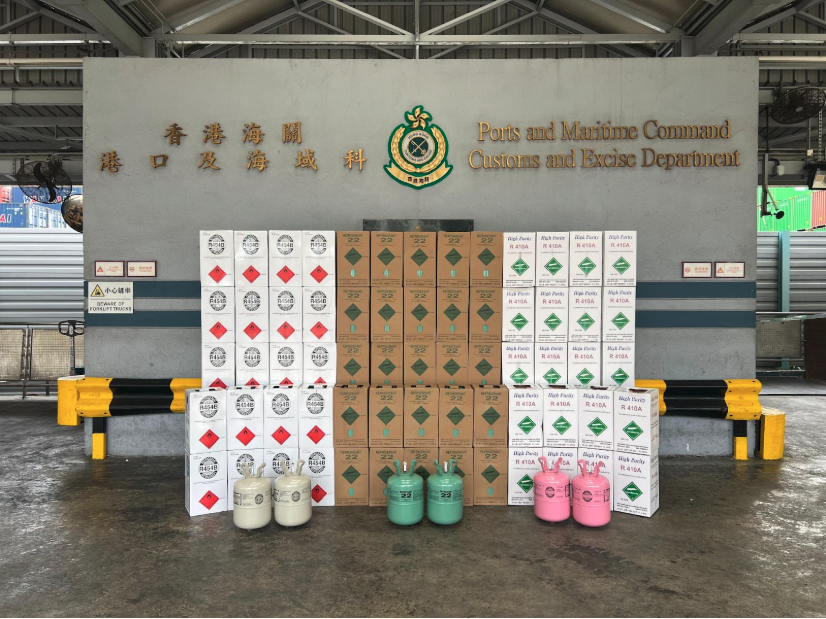
Suspected smuggled refrigerant seized during joint operation by Hong Kong Customs and the EPD on November 20th, 2025.
Inspection of the shipping container revealed a significant cache of refrigerants, including R-410A, R-454B, and the ozone-depleting hydrochlorofluorocarbon (HCFC) R-22, suspected to be illegally imported in violation of both the Import and Export Ordinance and the Ozone Layer Protection Ordinance.
Illegal refrigerants are more likely to be improperly packaged, handled, and transported, increasing the risk of leaks or intentional venting into the atmosphere. These substances have high global warming potentials (GWPs): R-410A has a GWP of 2,088, R-22 of 1,810, and R-454B of 466. Intercepting these cylinders before they reach the market helps avert avoidable emissions of these superpollutants while also reducing the risk of harm to end users and technicians.
According to the Hong Kong Customs press release, the suspect shipment arrived in Hong Kong from the US, with a falsely declared cargo of laminate flooring. Hong Kong Customs and the EPD have stated that joint follow-up investigations are underway and may potentially lead to arrests. This enforcement action demonstrates how intelligence-led enforcement and inter-agency cooperation can disrupt illegal refrigerant supply chains, benefiting both the climate and compliance with international environmental obligations.
Capacity Building for Enforcement
Ensuring that customs and enforcement officers are well equipped to tackle the illegal trade of controlled substances like HFCs and HCFCs requires practical, ongoing training to keep pace with evolving smuggling methods and regulatory requirements. In November 2025, the Philippine Ozone Desk of the Environmental Management Bureau (POD-EMB), with UNEP OzonAction as a technical partner, facilitated a comprehensive training workshop for Bureau of Customs (BOC) enforcement officers, to strengthen enforcement of national obligations under the Montreal Protocol and the Kigali Amendment and combat the illegal trade of ozone-depleting substances (ODS) and greenhouse gases (GHG). The workshop addressed a range of substantive and technical topics, ranging from common misdeclaration practices to advanced inspection techniques.
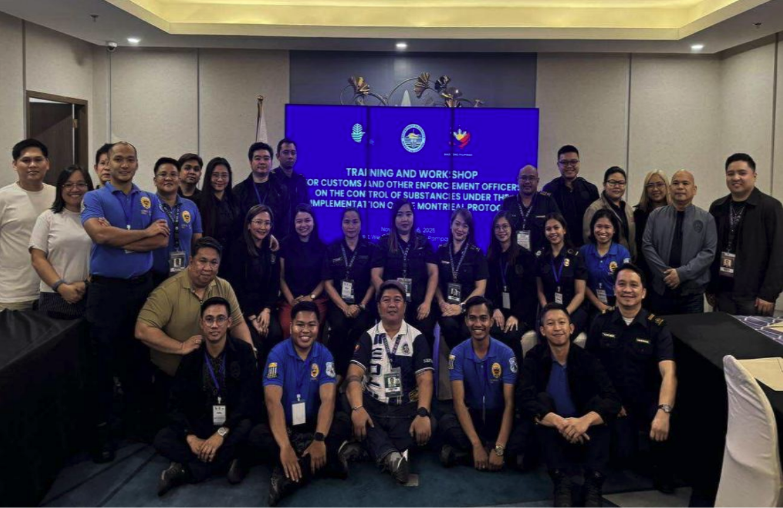
Bureau of Customs (BOC) officers during the workshop “Customs and Enforcement Officers’ Training Workshop on Strengthening Trade Control of Substances Under the Montreal Protocol” held in early November 2025, in Clark, Pampanga, the Philippines.
Enforcement Success
In December 2025, Customs Surveillance officers from the Spanish Tax Agency, carried out a joint operation with the Spanish National Police, to dismantle a criminal group operating in Spain since 2023, allegedly involved in the illicit marketing of fluorinated refrigerant gases. In eleven inspections in three cities, the authorities seized more than 48,515 kg (106,957 lbs) of illegal F-gases in locations connected to nine companies linked to the criminal network.
The 48.5 tonnes of refrigerant, in 4,781 containers, had a market value of approximately 3 million euros (over US$3.5 million), and lacked the necessary environmental traceability required by EU legislation.
4,781 cylinders of illegal refrigerant gases seized by Spanish authorities in an enforcement operation carried out in December 2025. Operation footage available here.
So far, five individuals have been arrested in this operation as alleged perpetrators of crimes against the environment, and for smuggling, fraud, and participation in a criminal group. The investigation is ongoing, and further inspections and arrests may ensue. The investigation has also linked significant financial activity to the criminal network, with transactions over 10 million euros (more than US$11.5 million), which could relate to additional offenses like money laundering and tax evasion.
As highlighted in Issue 3, in October 2025, Spanish authorities seized 53 tonnes of refrigerant gases in two enforcement actions, which also involved alleged smuggling and tax evasion. These enforcement cases illustrate the scale, profitability, and organization of the illegal refrigerant trade, and the need for effective monitoring and enforcement to disrupt these networks and prevent illegal refrigerants from entering the market.
Send us a tip
If you suspect illegal activity related to refrigerants, you may share information with EIA by filling out our anonymous form or emailing us confidentially at [email protected].
Report violations to the EPA
Possible violation of environmental laws or regulations may also be reported to the U.S. Environmental Protection Agency (EPA) here. Information about activities that pose an urgent safety or security threat should be immediately disclosed to relevant authorities.