Illegal Trade Bulletin: Issue 6
Holding Polluters Accountable: From Corporate Penalties to Global Enforcement
From major retailers facing million-dollar penalties in the U.S. to coordinated global crackdowns, enforcement actions reveal the scale and complexity of the illegal refrigerant trade. In Issue 6 of EIA’s Illegal Trade Bulletin, we highlight two recent U.S. enforcement successes, a major global operation targeting environmental crime, a refrigerant auction in Belgium, and a UN campaign celebrating women champions of environmental enforcement.
Enforcement Success
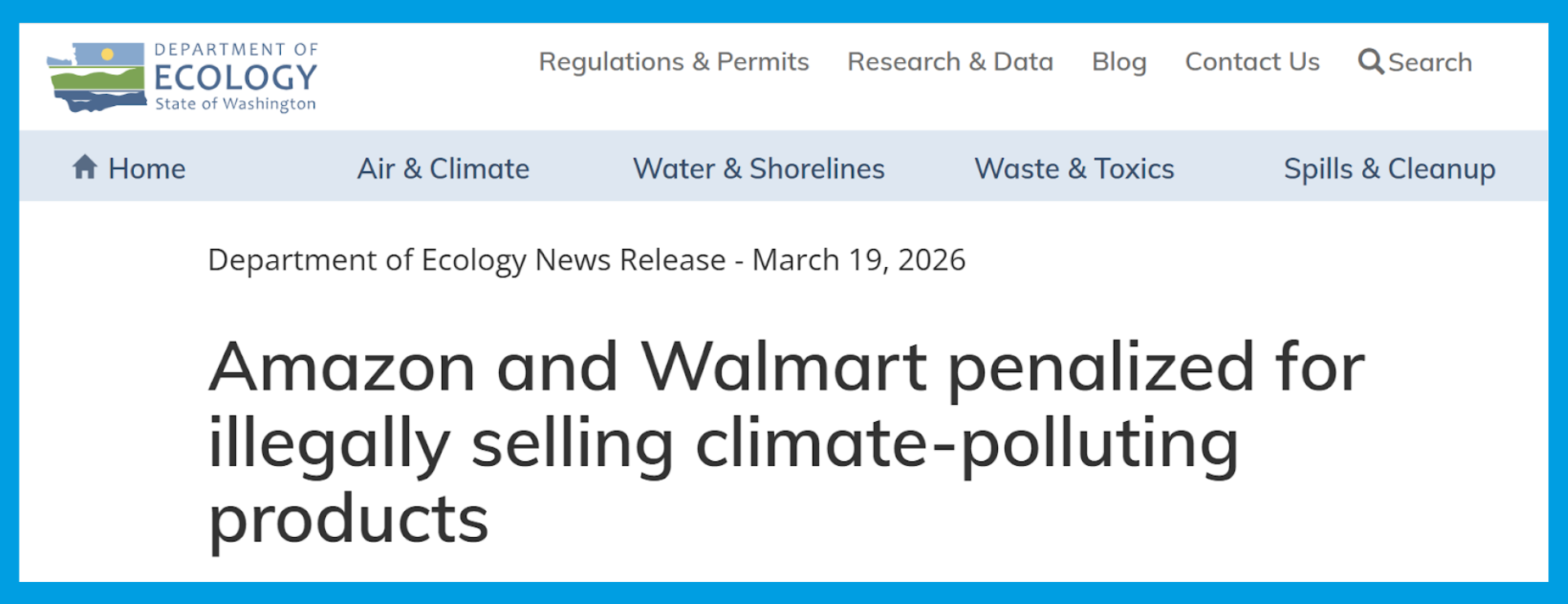
In the U.S., Washington State is leading efforts to tackle illegal refrigerant sales by major retailers. On March 19, 2026, the Washington State Department of Ecology (Ecology) announced penalties totalling over $1.1 million to Amazon Inc. ($800,068) and Walmart Inc. ($383,388) for illegally selling climate-polluting refrigerant products.
According to Ecology, despite years of warnings and compliance assistance, both companies continued selling motor vehicle air conditioning (MVAC) recharge cans with banned refrigerant R-134a. Although do-it-yourself or “DIY” refrigerant recharge cans may seem like a cheaper alternative to professional servicing, they often mean that MVAC leaks go unrepaired, resulting in the release of potent greenhouse gases into the atmosphere. Without proper repair, this cycle of recharging and leaking can repeat every cooling season, leading to years of avoidable refrigerant emissions. A single 16-ounce can of R-134a has the same climate impact as driving about 1,500 miles. Vehicles using R-134a refrigerant need to be repaired by an EPA-certified mechanic if the system starts leaking. As required under Section 609 of the Clean Air Act, any person who repairs or services an MVAC system for payment must be properly trained and certified by an EPA-approved program to ensure refrigerants are safely recovered.
Washington’s 2019-2021 laws phase out hydrofluorocarbon (HFC) refrigerants like R-134a that have global warming potentials (GWPs) hundreds to thousands of times more potent than carbon dioxide (CO2). Starting July 2021, retail sales of R-134a canisters were banned to discourage consumer recharging of leaking MVAC systems, and encourage the use of certified professionals for repairs and maintenance, helping prevent avoidable emissions of these climate-damaging substances.
This is not the first time that Ecology has taken action on combatting illegal HFC sales. In June 2024, Ecology fined Home Depot $1.6 million for illegal internet sales of R-134a MVAC recharge canisters in the state of Washington. Together, these cases show the importance of holding large retailers accountable for illegal refrigerant sales, particularly in an increasingly e-commerce-driven marketplace.
Combatting Environmental Crime: Operation Custos Viridis
On March 11, 2026, the U.S. Department of Justice announced their participation in a large-scale international operation targeting organized crime networks involved in waste trafficking and pollution crime. Operation Custos Viridis was led by Europol, with partners from 71 countries, alongside international organizations. Participation included the U.S. Justice Department’s Environment and Natural Resources Division (ENRD) and the U.S. Environmental Protection Agency (EPA).
The largest-ever global law enforcement operation focusing on pollution and waste crime, Operation Custos Viridis began with an intelligence phase from January to June 2025, followed by an operational phase from July to December 2025 across five continents. The operation aimed to significantly disrupt criminal networks engaged in environmental crime, including waste trafficking, pollution offenses, money laundering, tax evasion, and corruption. A significant amount of harmful substances were seized, including fluorinated gases (F-gases) used as refrigerants. In the U.S., investigations focused on the southern border, targeting individuals and organized crime attempting to smuggle super pollutant refrigerants and pesticides into the country.
Enforcement actions in the U.S. resulted in:
- 1,484 pounds of F-gases seized
- 40 pounds and 6 gallons of illegal pesticides seized
- 21 arrests
- Sentences totaling more than 21 months of imprisonment and 155 months of probation
- Over $4.2 million in restitutions and more than $2.2 million in forfeitures
Globally, enforcement actions resulted in:
- 602 tons of polluting agents, including 398 tons of F-gases, seized
- 2.3 tons of mercury and 127,149 tons of waste seized
- 75 tons of plant protection products seized
- 1,048 inspections and 337 arrests
- Over $10 million in seized assets, as well as 130 vehicles, heavy machinery, firearms, apartments, and companies
Depending on their final destination, investigators estimate the commercial value of the smuggled F-gases ranged from $17 million to $23 million.
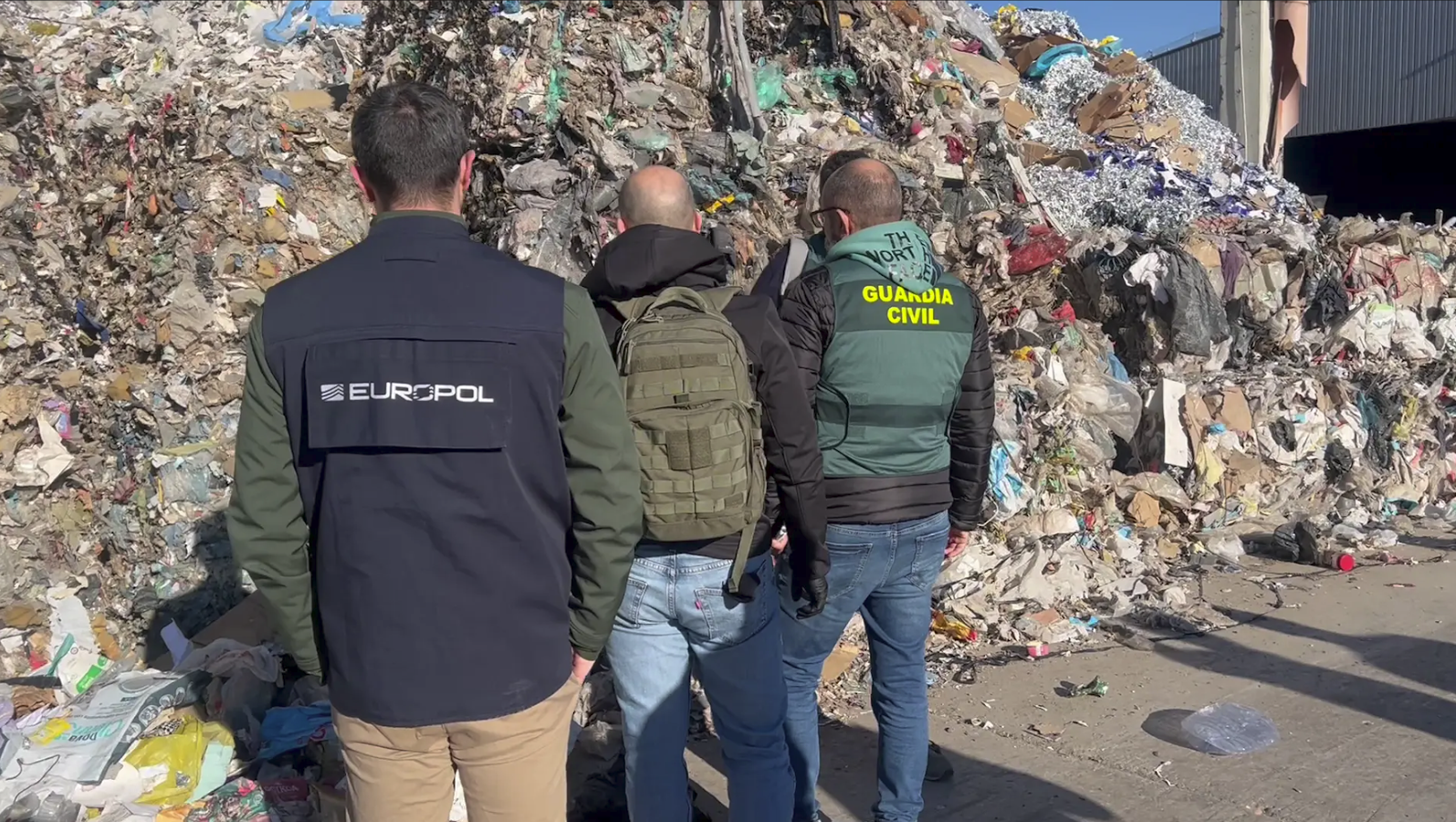
Caption: Enforcement officers during Operation Custos Viridis. Source: Europol
Highlighted in the U.S. Department of Justice press release, the operation’s effectiveness was significantly improved through collaboration with international and domestic partners. This underscores the importance of customs and enforcement capacity building, as well as inter-agency and cross-border cooperation and information-sharing in enforcing international environmental agreements like the Montreal Protocol and stopping illegal trade and other environmental crimes.
Enforcement Success
In their latest Environmental Crimes Bulletin from March 4, 2026, the U.S. Department of Justice provided an update on an investigation into refrigerant smuggling conducted by the U.S. EPA Criminal Investigation Division. On January 27th, 2026, an individual was sentenced after pleading guilty to smuggling HFCs into the U.S. This individual attempted to import seven 24-pound cylinders of HFCs into Texas from Mexico.
While the specific refrigerant was not disclosed, the smuggled refrigerant may have been R-404A, an HFC commonly used in the U.S. in refrigeration and air-conditioning, distributed in standard packaging of 24-lb disposable cylinders by major suppliers, unlike other widely used HFCs like R-134a, R-410A, and R-507A that are typically distributed in different cylinder sizes, such as 25 or 30 lbs. With a high GWP of 3,922: the climate impact of a single 24-lb cylinder of R-404A can equal the annual impact of driving ten cars, and the total 168 pounds in this case could represent 300 metric tons of CO2 equivalent (CO2e).
R-404A is being phased down in the U.S. under the American Innovation and Manufacturing (AIM) Act. At least one major U.S. producer has already discontinued U.S. sales of certain high-GWP refrigerants like R-404A, while other major producers have discontinued such sales in European markets to comply with the EU F-Gas Regulation. However, demand for R-404A will continue, especially to service existing commercial and industrial refrigeration equipment. Thus, refrigerants like R-404A can be a lucrative target for smuggling, and may still be illegally imported from countries on different regulatory phase-down timelines.
 Resource Spotlight

Did you know the U.S. EPA’s Greenhouse Gas Equivalencies Calculator can convert emissions or energy data into CO2e? It’s a useful tool to understand the climate impact of refrigerant, and to contextualize emissions with comparisons to annual emissions from cars, households, or power plants.
Confiscated Refrigerant for Auction in Belgium
Nearly 14 tonnes of confiscated HFC refrigerant, R-134a, is up for auction in Belgium, with bidding open until April 30, 2026. According to reporting by Cooling Post on March 13, 2026, the auction is linked to a 2024 seizure by Belgian Customs, involving a shipment without the necessary import quota under the EU F-Gas Regulation.
Sold through Fin Shop Bornem, the sales center of the Belgian government agency Federal Public Service (FPS) Finance, a total of 23 lots is up for auction, each lot consisting of 50 cylinders that contain 12 kg of R-134a. With the starting bid per lot at €2,700 (USD $3,114), this auction could earn more than €62,000. Belgian authorities have not disclosed how the auction revenue may be utilized, but could potentially offset costs associated with post-seizure refrigerant management. The 13,800 kg of R-134a up for auction is almost 18,000 metric tons of CO2e, which approximately amounts to the same emissions as burning 20 million pounds of coal.
As highlighted in Issue 5, post-seizure refrigerant management is a critical part of effective enforcement. Auctioning can help avoid the emissions and financial costs associated with long-term storage or destruction, but requires safeguards for environmental protection and regulatory compliance.
Before auctioning, seized refrigerants should be tested to check that purity is up to standards for market use, as illegally traded refrigerants may be counterfeit, mislabelled, contaminated, or stored in non-compliant cylinders. According to the auction catalog, the Customs and Excise laboratory analyzed and confirmed the contents of four random cylinders.
To prevent environmental harm or exceeding allocated quotas, only buyers registered in the EU F-Gas Portal with quota allocations can bid. They must demonstrate compliance with the EU F-Gas Regulation, including requirements for the return of the refrigerant cylinders for refilling, submission of import declarations to customs, and the payment of VAT and import duties. These safeguards support regulated and traceable management of seized refrigerants, proper lifecycle refrigerant management, and can minimize the risk of excess refrigerant entering the market.
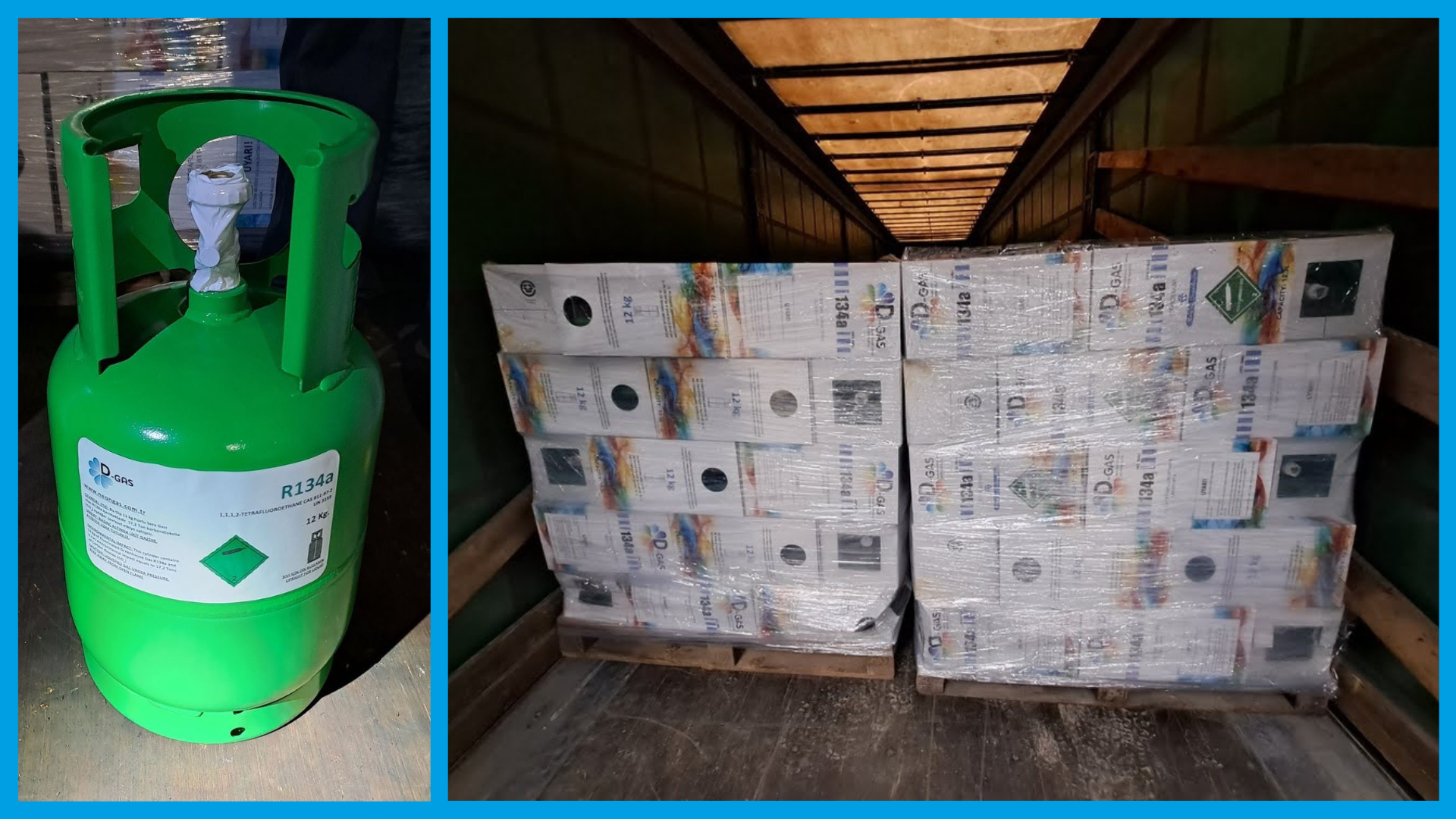
R-134a cylinders confiscated by Belgian authorities, up for auction until April 30, 2026. Source: Fin Shop Bornem
International Women’s Day: Champions of Environmental Enforcement
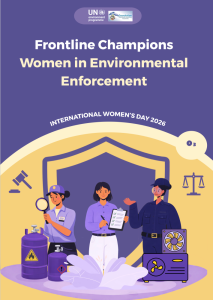
March 8th marked International Women’s Day, an opportunity to appreciate the contributions of women on the frontlines stopping environmental crime. UNEP Law Division’s OzonAction and the Montevideo Environmental Law Programme launched a global campaign to honor the women champions safeguarding the Montreal Protocol and the Kigali Amendment. Featuring quotes from women worldwide, the campaign highlights their roles in environmental enforcement, including national regulation and compliance monitoring, border control and trade monitoring, and legal accountability.